


Few colored gemstones combine rarity, unusual color, and modern history quite like Tanzanite. With hues that can move between rich blue, violet, and bluish purple, Tanzanite has an appearance that can seem to change as the stone is tilted under light. Its appeal is strengthened by another remarkable fact: gem-quality Tanzanite is commercially mined from a remarkably limited area in northern Tanzania.
Unlike sapphire, ruby, or emerald, Tanzanite is a relatively recent addition to the world of fine jewelry. Yet in just a few decades, this blue-to-violet gemstone has become one of the most recognizable colored stones on the market.
Whether you are considering a Natural Tanzanite, researching Tanzanite jewelry, or simply want to understand what determines Tanzanite gemstone price, this guide explains its origin, properties, color, treatments, durability, value factors, and buying considerations.
What Is Tanzanite?
Tanzanite is the transparent blue-to-violet gem variety of the mineral zoisite, a calcium aluminium silicate mineral. Its chemical formula is generally expressed as Ca₂Al₃(SiO₄)₃(OH).
Tanzanite is famous for three characteristics:
- Its distinctive blue-to-violet color range
- Strong pleochroism, which can produce different colors when viewed in different directions
- Its extremely limited geographic source
Tanzanite was discovered in northern Tanzania in the 1960s. The primary gem deposit at the Merelani Hills was identified in 1967. Tiffany & Co. subsequently helped introduce the gemstone to the international jewelry market and promoted the name “Tanzanite,” referring to its country of origin.
Tanzanite is also recognized as a December birthstone and is traditionally associated with the 24th wedding anniversary.
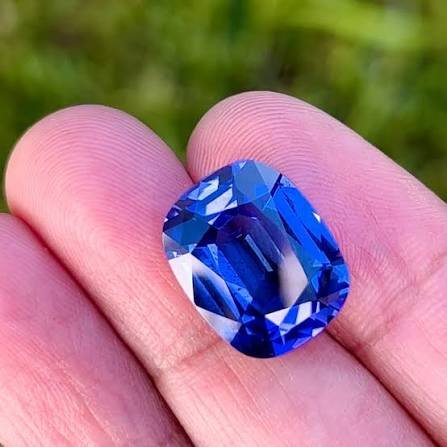
Tanzanite Origin: Where Is Tanzanite Found?
One of the most important facts about Tanzanite is its origin.
Gem-quality Tanzanite is commercially mined in the Merelani Hills of northern Tanzania, near Mount Kilimanjaro. This exceptionally restricted source is a major reason the gemstone is regarded as rare.
Why does Tanzanite origin matter?
Unlike gemstones that occur in many countries, Tanzanite has a very limited known commercial source. This means that its supply depends heavily on mining activity in one geographic region.
The geological setting is also part of Tanzanite’s identity. Material from Merelani occurs in a complex geological environment associated with rocks and minerals including graphite, diopside, calcite, and quartz.
Its single-source nature does not automatically determine the price of every stone, but it is an important part of Tanzanite’s rarity story and market appeal.
Tanzanite Color: Blue, Violet and Bluish Purple
Tanzanite color is one of its defining characteristics.
Fine stones can display:
- Violetish blue
- Bluish violet
- Rich violet
- Blue-purple combinations
Deep, saturated violet-blue and blue-violet colors are generally among the most sought-after appearances. Paler material is more commonly available.
What is pleochroism?
Pleochroism is the ability of a gemstone to show different colors when viewed from different crystallographic directions.
Tanzanite has particularly strong pleochroism. In untreated material, gemologists can observe combinations that may include blue, violet, and brownish or yellow-green colors depending on direction.
This characteristic has a direct effect on cutting.
A cutter must orient the rough carefully to decide which color will dominate when the finished gemstone is viewed face-up. A stone can therefore show predominantly blue, predominantly violet, or a mixture of both.
Hue, tone and saturation
When assessing Tanzanite color, consider three basic concepts:
- Hue: The basic color, such as blue or violet.
- Tone: How light or dark the color appears.
- Saturation: How strong or vivid the color appears.
A well-balanced stone generally looks lively rather than excessively dark or grayish. Color should always be judged in the finished gem under appropriate lighting rather than relying only on a photograph.
Tanzanite Properties & Specifications
| Property | Tanzanite |
|---|---|
| Mineral species | Zoisite |
| Chemical composition | Ca₂Al₃(SiO₄)₃(OH) |
| Crystal system | Orthorhombic |
| Mohs hardness | 6–7 |
| Refractive index | Approximately 1.691–1.700 |
| Specific gravity | Approximately 3.35 |
| Luster | Vitreous |
| Transparency | Transparent to translucent material exists; fine gem material is typically transparent |
| Cleavage | Perfect cleavage in one direction |
| Typical color | Violetish blue, bluish violet, violet-purple |
These properties are important because they help gemologists identify Tanzanite and also explain some of its care requirements.
The combination of moderate hardness and relatively poor toughness means Tanzanite should be protected from sharp impacts.
Tanzanite vs Sapphire
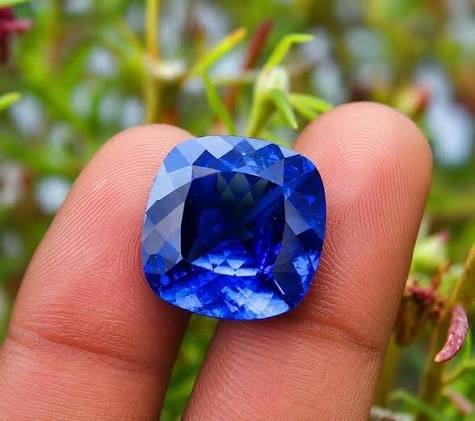
Tanzanite and blue sapphire can sometimes look similar, particularly when Tanzanite has a strong blue face-up appearance. However, they are very different gemstones.
| Feature | Tanzanite | Sapphire |
|---|---|---|
| Mineral | Zoisite | Corundum |
| Typical color discussed | Blue to violet-blue | Blue, plus many other colors |
| Mohs hardness | 6–7 | 9 |
| Durability | Moderate; requires care | Excellent for regular jewelry wear |
| Pleochroism | Strong | Can show pleochroism, depending on sapphire |
| Rarity | Very limited geographic source | Found in several regions worldwide |
| Appearance | Blue-violet color shift can be distinctive | Usually prized for strong, stable body color |
| Value | Highly dependent on color, clarity, cut and size | Highly dependent on color, origin, treatment, clarity and size |
| Common uses | Earrings, pendants, necklaces, rings and occasional-wear jewelry | Rings, earrings, necklaces, bracelets and everyday jewelry |
Sapphire has a significant durability advantage because corundum has a Mohs hardness of 9. Tanzanite, by comparison, ranks 6–7 and has cleavage that makes it more vulnerable to impact.
That does not make Tanzanite unsuitable for jewelry. It simply means the setting and intended use deserve more consideration.
Tanzanite Value & Price: What Determines It?
There is no single universal Tanzanite price. The Tanzanite gemstone price can vary substantially according to quality, size, market conditions, treatment, documentation, and seller.
The most important value factors include:
1. Color
Color is usually one of the most important considerations. Rich, saturated blue-to-violet colors tend to command stronger prices than pale or weakly saturated material.
2. Clarity
Eye-visible inclusions can reduce value, particularly when they affect transparency or durability.
3. Cut
A well-executed cut can improve brilliance, color presentation, and overall appearance. Poor cutting can make even attractive rough look dull or uneven.
4. Carat weight
Larger Tanzanites with strong color and good clarity can be particularly desirable. Size, however, should not be considered separately from color and cut.
5. Treatment
Most Tanzanite sold in the jewelry market has undergone heat treatment. Treatment itself is not necessarily a negative characteristic, but it should be understood and properly disclosed.
6. Origin
Tanzanite’s geographic origin is unusual because commercial gem production is concentrated in the Merelani area of Tanzania.
Because prices change over time and differ substantially between qualities and sellers, buyers should compare stones based on actual gemological characteristics rather than relying on a simple price-per-carat chart.
Tanzanite Treatment: Is It Heat Treated?
Yes. Heat treatment is routine for Tanzanite.
Much Tanzanite rough is naturally brownish or contains brown color components. Controlled heating can remove or reduce the brownish component and produce the blue-to-violet appearance associated with the gemstone.
Treated vs. untreated Tanzanite
Untreated Tanzanite with naturally attractive blue coloration is uncommon. Most commercially encountered blue Tanzanite has been heated.
The treatment is generally considered stable under normal conditions. GIA notes that heating does not create additional durability concerns for normal wear, although the stone should still be protected from extreme temperatures and sudden temperature changes.
Treatment disclosure remains important because consumers should know whether a gemstone has been modified and what treatment has been identified.
Tanzanite Cuts & Shapes
Tanzanite is available in many shapes, with oval, cushion and trillion among the commonly encountered cuts.
Other popular choices include:
- Oval
- Cushion
- Round
- Pear
- Emerald cut
- Trillion
- Fancy shapes
Cut affects more than sparkle. Because Tanzanite is strongly pleochroic, the cutter’s orientation can influence whether the finished gemstone appears more blue or more violet.
A brilliant-style or mixed cut can emphasize lively reflections, while step-cut designs such as emerald cuts can create a more orderly, elegant appearance. The best choice depends on the rough, color distribution, proportions and the buyer’s aesthetic preference.
Tanzanite Clarity
Clarity refers to the presence, size, location and visibility of internal characteristics and surface-reaching features within a gemstone.
Fine Tanzanite is often relatively clean to the unaided eye. Eye-visible inclusions can reduce value, especially when they affect transparency. Fractures are particularly important because they can also create durability concerns.
When buying Tanzanite, examine the stone under good lighting and, where possible, with magnification. A tiny inclusion that is invisible during normal viewing may be far less important than a fracture that reaches the surface.
Tanzanite Carat Weight
A carat is a unit of weight used for gemstones. One carat equals 0.2 grams.
Carat weight does not directly equal physical size because different gemstones and cuts can have different densities and proportions.
Tanzanite is relatively dense, with a specific gravity of approximately 3.35. Two stones with identical carat weights can therefore have different face-up dimensions depending on their shape and cutting.
Larger fine-quality Tanzanites can be particularly desirable. However, size should never be considered in isolation. A smaller stone with exceptional color and excellent cutting may be more attractive than a larger stone with weak color or poor proportions.
How to Buy Genuine Tanzanite
Buying Genuine Tanzanite requires more than simply looking for an attractive blue gemstone.
Ask for identification
For significant purchases, consider an independent gemological laboratory report confirming what the stone is and identifying detectable treatments.
A laboratory report can be especially useful when purchasing an expensive stone because visual appearance alone cannot establish gem identity with certainty.
Ask the seller:
- Is the gemstone natural?
- Has it been heat treated?
- Are any other treatments present?
- Does the stone have a laboratory report?
- What are its exact carat weight and dimensions?
- Is the stone loose or mounted?
- What is the return period?
- Is the report available for inspection before purchase?
GIA evaluates Tanzanite and can identify whether material is natural or laboratory-grown and report detectable treatments; it does not assign the kind of standardized “AAA” grade sometimes used commercially.
Be cautious with unexplained quality labels such as “AAA,” “AAAA,” or similar grades. There is no universal standardized Tanzanite grading scale for these terms.
Tanzanite Care & Cleaning
Tanzanite care is relatively simple, but the gemstone should be treated more gently than sapphire.
Recommended cleaning
The safest method is:
- Use lukewarm water.
- Add mild soap.
- Gently clean with a soft cloth or soft brush.
- Rinse carefully.
- Dry with a soft cloth.
GIA specifically recommends warm, soapy water and advises against ultrasonic and steam cleaners for Tanzanite.
Avoid
- Ultrasonic cleaners
- Steam cleaners
- Sudden temperature changes
- Very high heat
- Hard impacts
- Harsh chemicals
Tanzanite has cleavage and fair-to-poor toughness, so an accidental blow can cause damage even if the stone has not been scratched.
Store Tanzanite separately from harder gemstones such as sapphire or diamond to reduce the risk of scratching.
Is Tanzanite Suitable for Everyday Jewelry?
Tanzanite can be worn in jewelry, but the design should match its durability.
Rings
Rings receive frequent impacts, making them the most demanding application. If worn regularly, choose a protective setting and avoid wearing Tanzanite rings during sports, manual work or other activities where the stone could be struck.
Earrings
Earrings are generally a good choice because they are less exposed to impact.
Pendants and necklaces
These are excellent options for showing off Tanzanite while reducing the risk of accidental knocks.
Bracelets
Bracelets can be exposed to repeated impacts, so Tanzanite bracelets deserve more care than earrings or pendants.
GIA notes that Tanzanite can be used in all jewelry styles with appropriate precautions, while recommending protective settings and extra care for rings.
Tanzanite Jewelry: Why Is It So Popular?
The unusual color combination makes Tanzanite particularly versatile in jewelry.
It can be used in:
- Tanzanite rings
- Stud and drop earrings
- Pendants
- Necklaces
- Bracelets
- Statement jewelry
Its blue-violet appearance works especially well with white metals and can also complement yellow or rose gold. Ultimately, the best metal depends on the gemstone’s particular color and the wearer’s preferred style.
Tanzanite Benefits & Symbolism
Tanzanite has developed various symbolic associations in jewelry and spiritual traditions.
It is sometimes associated with ideas such as:
- Transformation
- Calmness
- Intuition
- Spiritual awareness
- New beginnings
These are traditional or spiritual beliefs rather than scientifically established properties. There is no reliable scientific evidence that wearing Tanzanite provides medical treatment, cures disease, or guarantees particular emotional or spiritual outcomes.
For buyers interested in symbolism, these traditions can be appreciated as cultural or personal meanings rather than scientific claims.
Why Is Tanzanite So Rare?
Tanzanite’s rarity is closely connected to its geography.
Unlike many gemstones with multiple important producing regions, gem-quality Tanzanite is commercially mined from the Merelani Hills in northern Tanzania.
This limited source means the gemstone’s future supply is closely tied to the geology and mining conditions of one region.
That single-source characteristic is one reason Tanzanite has developed such a strong reputation for rarity. It is also important to avoid turning rarity into a guarantee of investment performance: gemstone markets can fluctuate, and rarity alone does not guarantee that a particular stone will appreciate in value.
Tanzanite Buying Checklist
Before purchasing a Tanzanite gemstone, use this checklist:
- Color: Is the blue/violet color vivid and attractive?
- Tone: Is it excessively dark, too pale, or well balanced?
- Saturation: Does the color look strong rather than grayish?
- Clarity: Are inclusions visible to the naked eye?
- Cut: Does the gemstone return light evenly?
- Carat: Is the weight appropriate for the stone’s dimensions?
- Treatment: Has heat treatment been disclosed?
- Certification: Is an independent laboratory report available for a significant purchase?
- Seller: Does the seller have a strong reputation and transparent policies?
- Return policy: Can the gemstone be returned if it does not match expectations?
- Price comparison: Have you compared stones of genuinely similar color, clarity, size and cut?
Most importantly, compare the stone itself, not just its advertised grade or price per carat.
Frequently Asked Questions About Tanzanite
1. Is Tanzanite a real gemstone?
Yes. Tanzanite is a natural gemstone variety of the mineral zoisite. It is a recognized gem species with established chemical, physical and optical properties.
2. Where is Tanzanite found?
Gem-quality Tanzanite is commercially mined in the Merelani Hills of northern Tanzania.
3. Is Tanzanite rare?
Yes, its commercial source is exceptionally limited. Its restricted geographic origin is a major part of its rarity and market identity.
4. Is Tanzanite durable?
Tanzanite has a Mohs hardness of 6–7 but relatively low toughness and cleavage. It can be durable enough for jewelry when properly handled, but it is more vulnerable to impact than sapphire.
5. Can Tanzanite be worn every day?
It can, but daily wear requires care. Pendants and earrings are generally less exposed to impacts than rings. Protective settings are advisable for rings.
6. Is Tanzanite heat treated?
Most blue Tanzanite in the market has been heat treated. Heating is commonly used to reduce brownish color components and produce blue-to-violet colors.
7. How can I identify genuine Tanzanite?
Professional gemological testing is the most reliable approach. A laboratory identification report is particularly valuable for expensive purchases. Visual inspection alone is not sufficient to establish authenticity with certainty.
8. Is Tanzanite more valuable than Sapphire?
There is no universal answer. Tanzanite and sapphire have different value factors, and individual stones can vary enormously. Compare color, clarity, cut, carat weight, treatment, origin and market conditions rather than assuming one gemstone is always more valuable.
9. How should Tanzanite be cleaned?
Clean it with warm or lukewarm soapy water and a soft cloth or brush. Avoid ultrasonic and steam cleaners.
10. What determines Tanzanite’s price?
Color, clarity, cut, carat weight, treatment, origin documentation, market conditions and seller reputation can all influence price. Color and overall quality are particularly important.
11. What is pleochroism in Tanzanite?
Pleochroism is the ability to display different colors when viewed from different crystallographic directions. It is one of Tanzanite’s most distinctive optical characteristics.
12. Is “AAA Tanzanite” an official grading standard?
No. Terms such as AAA, AA and A are used by some commercial sellers, but there is no universal standardized grading system for these labels.
Conclusion: What Makes Tanzanite Special?
Tanzanite is special because several unusual characteristics come together in one gemstone: a striking blue-to-violet color range, strong pleochroism, a fascinating modern history, and an exceptionally restricted geographic source.
For buyers, the most important lesson is that Tanzanite quality is about much more than carat weight. Color, saturation, clarity, cut, treatment and durability all deserve attention. A reputable seller, transparent treatment disclosure, appropriate return policy and independent laboratory documentation can provide additional confidence, particularly for a high-value purchase.
If you appreciate gemstones with distinctive character and a fascinating geological origin, Tanzanite offers something genuinely different. Its beauty is not simply its blue color—it is the interplay of blue and violet, the way the stone changes with orientation, and the fact that this remarkable gemstone comes from a remarkably small part of the world.
