


Tourmaline is one of the most visually diverse gemstone minerals in the world. It can occur in shades ranging from black, brown, green, blue, pink, and red to yellow and nearly colorless, and a single crystal can sometimes contain more than one color. This remarkable diversity is one of the reasons Tourmaline is appreciated by gemstone collectors, jewelry enthusiasts, mineral collectors, and anyone who enjoys naturally formed crystals.
Unlike a gemstone that is recognized primarily for one characteristic color, Tourmaline offers an unusually broad range of appearances. Its crystals may be transparent, translucent, or opaque, while natural color zoning can create attractive bands or transitions within the same crystal.
The specimen discussed here should be evaluated primarily by its visible characteristics and any documented information supplied with the product. Since the product photograph available for this article cannot currently be examined, no specific color, locality, weight, dimensions, treatment status, or Tourmaline variety is assigned to the pictured specimen.
What Is Tourmaline?
Tourmaline is not a single mineral species but a group of closely related borosilicate minerals with complex and variable chemical compositions. The group includes several recognized mineral species, with elbaite being especially important in gem-quality material.
A commonly cited generalized Tourmaline formula is:
(Na,Ca)(Li,Mg,Al)(Al,Fe,Mn)₆(BO₃)₃(Si₆O₁₈)(OH)₄
The exact composition can vary considerably as different elements occupy positions within the crystal structure. Iron, magnesium, lithium, manganese, calcium, sodium, aluminum, and other elements can occur in different proportions. These chemical variations contribute to the extraordinary range of Tourmaline colors and appearances.
Tourmaline crystals commonly have a prismatic form and may show longitudinal striations or grooves along their surfaces. The mineral has a Mohs hardness of approximately 7 to 7.5, making it relatively durable compared with many other minerals.
What Does Tourmaline Look Like?
Tourmaline can look dramatically different from one specimen to another.
A natural Tourmaline crystal may be:
- Black or brown
- Green, blue, pink, or red
- Yellow or nearly colorless
- Transparent to translucent
- Opaque in darker varieties
- Uniformly colored or strongly color-zoned
- Single-colored, bi-colored, or multicolored
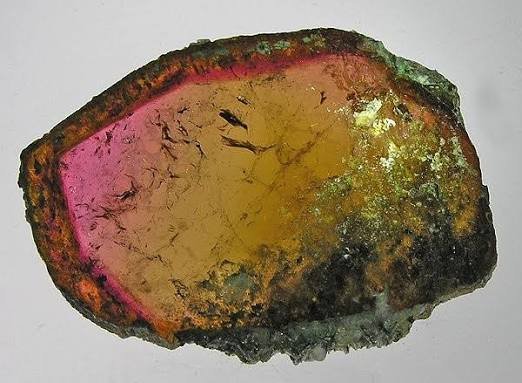
Some Tourmaline crystals display color zoning that developed as the crystal grew. These zones may appear as bands along the length of a crystal or as concentric arrangements across a cross-section. Watermelon Tourmaline is a particularly recognizable example, with pink material surrounded by green.
About the Specimen Shown in the Product Photograph
Because the product photograph is not accessible in the current conversation, it would not be responsible to state that this particular specimen has a specific color, transparency, color zoning, crystal termination, surface texture, or internal feature.
For an accurate product description, the photograph should be assessed for observable characteristics such as:
- The dominant visible color or colors
- Whether the crystal is transparent, translucent, or opaque
- Visible color bands or zoning
- Natural striations along crystal faces
- Crystal termination and overall crystal habit
- Matrix minerals, if visibly present
- Natural fractures, inclusions, pits, or surface irregularities
- Whether the specimen is a complete crystal, crystal fragment, rough piece, polished piece, or cut gemstone
Photographic identification can suggest a Tourmaline variety, but visual appearance alone is not always sufficient for definitive mineral or variety identification. Laboratory testing may be required when species, treatment, origin, or specific variety needs to be confirmed.
How Is Tourmaline Formed?
Tourmaline commonly develops in geological environments where boron-rich fluids interact with rocks during crystal formation. Gem-quality Tourmaline is especially associated with granitic pegmatites, which are coarse-grained igneous rocks formed from the final stages of crystallization of certain magmas.
As hot, chemically enriched fluids move through fractures and cavities in rock, elements such as boron, lithium, aluminum, iron, and other components can become available for Tourmaline growth.
Over geological time, crystals can develop slowly within these environments. Changes in the chemical composition of the growth environment may cause changes in the elements incorporated into the crystal. This is one reason why a single Tourmaline crystal can sometimes show striking changes in color.
Tourmaline can also occur in metamorphic rocks such as marble and schist. Different geological environments favor different Tourmaline compositions, which contributes to the diversity found throughout the Tourmaline mineral group.
Types and Colors of Tourmaline
Tourmaline encompasses numerous mineral species and many commonly used color and trade names.
Schorl
Schorl is typically black and is an iron-rich member of the Tourmaline group. It is common in a variety of geological environments and is more frequently encountered as a mineral specimen than as a traditional faceted gemstone.
Elbaite
Elbaite is particularly important in the world of gem-quality Tourmaline. It can occur in a wide range of colors, including green, pink, red, blue, yellow, purple, and nearly colorless material. Many familiar gem varieties and trade names are associated with elbaite.
Rubellite
Rubellite generally refers to pink through red Tourmaline, including shades of purplish red, orangy red, and reddish tones. The exact use of the term can vary within the gem trade, particularly concerning lighter pink material.
Indicolite
Indicolite is a trade name commonly associated with blue to greenish-blue Tourmaline. Depending on the stone, the color can range from relatively light blue to deeper violetish or greenish blue.
Paraíba Tourmaline
Paraíba is associated with vivid blue, greenish-blue, and blue-green Tourmaline colors related primarily to copper and manganese. The name has a specific gemological and trade history and should not simply be applied to any blue or green Tourmaline based on appearance alone. Modern gem identification may use chemical analysis when the designation needs to be established.
Green Tourmaline
Green Tourmaline encompasses a range of green hues. Different chemical compositions and trace elements can contribute to green coloration. Some material is sold under names such as verdelite or chrome Tourmaline, depending on its characteristics and composition.
Watermelon Tourmaline
Watermelon Tourmaline is known for its distinctive pink-and-green color arrangement. Classic material has a pink center and green outer portion, although Tourmaline can exhibit many other types of multicolor zoning.
Tourmaline Properties
| Property | Tourmaline |
|---|---|
| Mineral group | Tourmaline group |
| Chemical composition | Complex borosilicate; composition varies by species |
| Mohs hardness | Approximately 7–7.5 |
| Luster | Typically vitreous |
| Transparency | Transparent, translucent, or opaque depending on material |
| Typical colors | Black, brown, green, blue, pink, red, yellow, purple, colorless, and multicolored |
| Crystal system | Trigonal |
| Crystal habit | Commonly prismatic, often with longitudinal striations |
| Common occurrences | Granitic pegmatites and various metamorphic environments |
Tourmaline’s chemical complexity explains why the group includes many related compositions rather than a single fixed chemical formula. Its hardness and characteristic crystal form also make it an important mineral for both collectors and the gemstone trade.
Why Is Tourmaline Popular?
Tourmaline is popular because few gemstone groups offer such a broad visual range.
For gemstone collectors, different colors and varieties provide an opportunity to build a collection around a single mineral group.
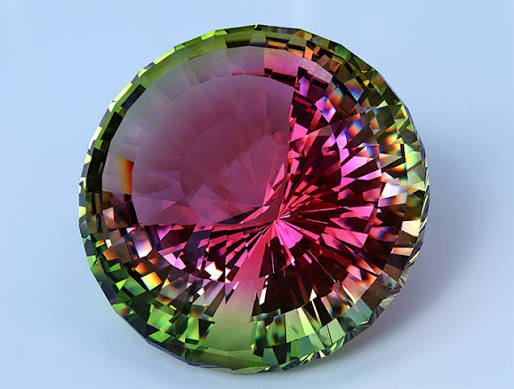
For jewelry enthusiasts, transparent Tourmaline can be fashioned into faceted gemstones, cabochons, and other decorative cuts.
For mineral collectors, natural crystals can be attractive even when they are not suitable for cutting. Crystal shape, striations, zoning, inclusions, and associations with other minerals can all add collector interest.
Tourmaline is also appealing because each natural specimen can have its own combination of color and internal characteristics.
How to Choose a Quality Tourmaline
There is no single feature that determines the quality of every Tourmaline specimen. The appropriate criteria depend on whether you are purchasing a faceted gemstone, cabochon, rough crystal, or mineral specimen.
Color
Color is often one of the first things buyers notice. Look for attractive, consistent coloration when that is desirable, or distinctive zoning when purchasing a multicolored specimen.
Transparency
Transparent Tourmaline can be desirable for faceted gemstones, while translucent or opaque material can be excellent for mineral specimens.
Clarity
Natural Tourmaline may contain inclusions, fractures, growth features, or other internal characteristics. These should be evaluated in relation to the intended use.
Color Zoning
Natural zoning can be an important visual feature. Some collectors specifically seek crystals showing multiple colors or well-defined growth zones.
Crystal Formation
For rough Tourmaline, crystal shape, termination, striations, completeness, and overall formation can be more important than factors used to evaluate a faceted gemstone.
Size
Larger does not automatically mean better. A smaller crystal with attractive color and excellent formation may be more appealing to a collector than a larger but poorly formed specimen.
Natural Characteristics
Natural pits, inclusions, fractures, and irregularities can occur in rough minerals. They should not automatically be treated as defects without considering the type and purpose of the specimen.
Damage or Fractures
Examine the specimen carefully for chips, broken terminations, significant fractures, or repairs, particularly when buying natural crystals.
Cut and Polish
For faceted or polished Tourmaline, consider symmetry, proportions, polish, transparency, color distribution, and overall appearance.
Origin
Locality can be important to collectors, but it should be accepted as documented information rather than inferred from appearance. A reliable locality claim should be supported by appropriate provenance or seller documentation.
Tourmaline for Jewelry and Mineral Collections
Tourmaline is widely used in jewelry when the material has suitable transparency, color, clarity, and durability.
Faceted Tourmaline can be used in rings, pendants, earrings, bracelets, and other jewelry designs. Because Tourmaline occurs in so many colors, it offers considerable flexibility for jewelry designers.
Natural rough Tourmaline is equally attractive to mineral collectors. Well-formed crystals can be displayed in cabinets, on shelves, or as part of a larger mineral collection.
Some specimens are also used as decorative objects, especially when they show attractive crystal forms, color zoning, or associations with matrix minerals.
How to Care for Tourmaline
Tourmaline is reasonably durable, but proper care helps preserve its appearance.
Cleaning
For most Tourmaline pieces, gentle cleaning with lukewarm water, mild soap, and a soft cloth is a practical approach. Rinse carefully and dry with a soft cloth.
Avoid Harsh Chemicals
Avoid exposing Tourmaline to strong household chemicals, acids, and unnecessary cleaning agents.
Avoid Scratches
Although Tourmaline is relatively hard, it can still be scratched by harder materials. Store it separately from harder gemstones and minerals when possible.
Handle Rough Specimens Carefully
Natural crystals may contain fractures or delicate terminations. Avoid dropping them or applying unnecessary pressure to thin crystal points.
For valuable, treated, repaired, or unusually delicate material, professional gemological advice is preferable before using specialized cleaning equipment.
Tourmaline Meaning and Symbolism
Tourmaline has acquired various meanings and symbolic associations in different cultures and modern gemstone traditions. Depending on the color, it may be associated with concepts such as balance, protection, creativity, emotional strength, or personal growth.
These are traditional or metaphysical beliefs rather than scientifically established properties. There is no reliable scientific evidence that Tourmaline can diagnose, prevent, or cure medical conditions.
For that reason, Tourmaline is best appreciated for its natural beauty, mineralogical characteristics, cultural history, and craftsmanship rather than as a substitute for medical treatment.
Why Choose This Tourmaline Specimen?
This Tourmaline specimen can be appreciated as a natural example of one of the most visually diverse mineral groups.
Because the photograph supplied for this article is not currently accessible for inspection, the specimen’s specific visible color, crystal form, transparency, zoning, surface features, and other photographic characteristics should be confirmed directly from the product listing before publication.
For an online gemstone or mineral store, an accurate product description should focus on what can actually be seen and documented. If the specimen shows natural crystal faces, striations, color zoning, inclusions, or other distinctive features, those characteristics can be highlighted without making unsupported claims about rarity, locality, treatment, or monetary value.
A natural Tourmaline specimen can be an appealing addition to a mineral collection, gemstone display, jewelry project, or personal collection simply because of its individual character.
Frequently Asked Questions
1. What is Tourmaline?
Tourmaline is a group of complex borosilicate minerals. It includes several mineral species and occurs in an unusually wide variety of colors and forms.
2. What colors can Tourmaline be?
Tourmaline can occur in black, brown, green, blue, pink, red, yellow, purple, nearly colorless, and multicolored forms. Some crystals display distinct color zoning.
3. Is Tourmaline a natural gemstone?
Yes. Tourmaline is a naturally occurring mineral group, and suitable natural material is widely used as gemstone material and mineral specimens.
4. How hard is Tourmaline?
Tourmaline has a Mohs hardness of approximately 7 to 7.5, making it relatively durable for jewelry and everyday handling when properly cared for.
5. Is Tourmaline suitable for jewelry?
Certain Tourmaline varieties are suitable for jewelry, particularly transparent material with good durability and appropriate cutting. Jewelry should still be handled with reasonable care.
6. How should Tourmaline be cleaned?
Gentle cleaning with lukewarm water, mild soap, and a soft cloth is generally suitable. Avoid harsh chemicals and rough handling.
7. What makes Tourmaline valuable?
Value can depend on factors such as color, saturation, transparency, clarity, size, cutting quality, variety, color zoning, provenance, and market demand. No single characteristic determines value for every Tourmaline.
8. How can I tell if Tourmaline is genuine?
A trained gemologist can examine a specimen using properties such as refractive behavior, optical characteristics, specific gravity, inclusions, and other tests. Visual appearance alone is not always enough to establish a definitive identification or variety.
Final Thoughts
Tourmaline is a remarkable mineral group that combines geological complexity with exceptional visual diversity. From black Schorl and green Tourmaline to pink Rubellite, blue Indicolite, and naturally zoned Watermelon Tourmaline, it offers something for many different types of collectors and gemstone enthusiasts.
Whether you prefer a polished gemstone for jewelry or a natural Tourmaline crystal for a mineral collection, its appeal comes from its authentic geological character and the extraordinary range of forms created by nature.
Explore the available Tourmaline specimens in the collection and choose the piece whose natural color, crystal character, and individual appearance best suit your collection or jewelry project.
