


Blue Sapphire, traditionally known as Neelam or Neelam stone, is one of the world’s most recognized precious gemstones. Admired for its rich blue color, exceptional durability and association with fine jewelry, sapphire has been treasured across cultures for centuries.
For modern buyers, however, purchasing a Blue Sapphire involves more than choosing an attractive blue stone. Factors such as color, clarity, cut, carat weight, treatment, origin and laboratory documentation can significantly influence a sapphire’s identity, quality and market value.
This guide explains the science behind the Blue Sapphire gemstone, the characteristics buyers should understand, commonly encountered treatments and origins, the difference between natural and synthetic sapphire, and practical steps for purchasing a stone with confidence.
Important: A sapphire’s appearance in a photograph or under ordinary visual inspection cannot conclusively establish its natural status, treatment, origin, carat weight, authenticity or quality grade. Those details should be confirmed through appropriate gemological testing and documentation.
What Is Blue Sapphire?
Blue Sapphire is the blue variety of corundum, a mineral composed primarily of aluminum oxide (Al₂O₃). Corundum occurs in several colors, with red corundum being classified as ruby and other colors generally classified as sapphire.
The blue color of sapphire is primarily associated with trace elements, particularly iron and titanium. The exact chemistry and geological conditions responsible for color can vary between deposits.
Blue Sapphire is especially valued for its combination of:
- Attractive blue coloration
- High hardness
- Good durability for everyday jewelry
- Strong vitreous luster when well cut and polished
- Availability in a broad range of qualities and sizes
- Historical and cultural significance
A beautiful sapphire is not necessarily valuable simply because it is dark blue. Color quality, saturation, tone, clarity, cut and treatment status all need to be considered together.
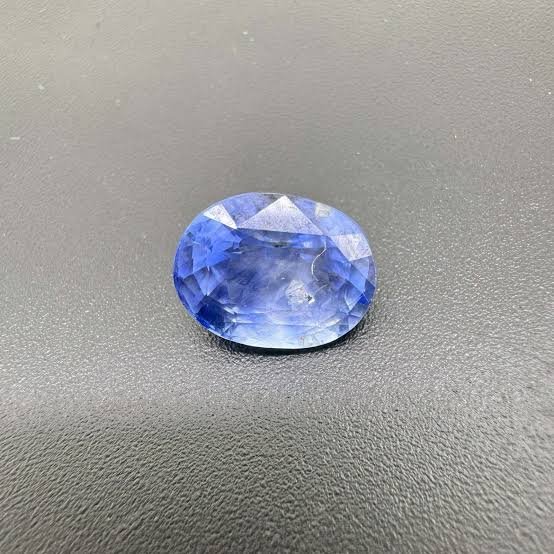
Blue Sapphire Gemstone: Scientific Properties
| Property | Blue Sapphire |
|---|---|
| Mineral | Corundum |
| Chemical composition | Aluminum oxide (Al₂O₃) |
| Crystal system | Trigonal |
| Mohs hardness | 9 |
| Typical luster | Vitreous |
| Refractive index | Approximately 1.760–1.770 |
| Specific gravity | Approximately 4.00 |
| Color | Blue, ranging from light to deep blue |
| Transparency | Transparent to opaque, depending on material |
| Jewelry suitability | Excellent, particularly when properly cut and set |
These figures describe typical gemological characteristics of corundum and should not be interpreted as laboratory measurements of any particular stone offered for sale.
Corundum Family
Corundum is a naturally occurring mineral species. In gemology, its color helps determine the traditional gemstone classification.
- Ruby: red corundum
- Sapphire: gem-quality corundum in colors other than red, including blue
Blue Sapphire is therefore a genuine sapphire when it is confirmed to be corundum exhibiting the appropriate blue color.
Mohs Hardness
With a Mohs hardness of 9, sapphire ranks immediately below diamond on the Mohs hardness scale. This makes it one of the more durable gemstones for jewelry.
Hardness does not mean that a sapphire is impossible to damage. A gemstone can still chip or fracture if struck with sufficient force, particularly around inclusions, facet junctions or vulnerable edges.
Luster and Crystal Structure
Well-polished sapphire generally displays a vitreous, or glass-like, luster. Its crystal structure is trigonal.
The way light interacts with the crystal, inclusions, cut and polished surfaces contributes to the visual appearance of an individual gemstone.
What Determines Blue Sapphire Quality?
There is no single characteristic that determines the quality of every sapphire. Buyers should consider several factors together.
1. Color
Color is one of the most important considerations when evaluating Blue Sapphire.
Blue sapphires can range from relatively light blue to deeply saturated blue. The most commercially desirable appearance often involves an attractive balance of:
- Hue
- Tone
- Saturation
- Evenness of color
- Brightness and visual appeal
An excessively dark stone may appear nearly black in some lighting, while a very pale stone may have less visual intensity. Personal preference and market segment also influence what buyers consider attractive.
Importantly, the most desirable blue is not simply the darkest blue.
2. Clarity
Natural gemstones commonly contain inclusions. In fact, certain inclusions can provide useful information to gemologists when determining whether a stone is natural or laboratory-grown and whether it may have undergone treatment.
However, clarity remains important because excessive or strategically located inclusions can reduce transparency, brilliance or durability.
A sapphire does not necessarily need to be completely free of inclusions to be attractive or valuable.
3. Cut
Cut determines how effectively a gemstone interacts with light.
A well-executed sapphire cut can improve:
- Brightness
- Face-up appearance
- Color presentation
- Symmetry
- Proportions
- Overall beauty
Common sapphire shapes include oval, cushion, round, pear, emerald and mixed cuts, among others.
The best cut depends partly on the rough material. Cutting a sapphire involves balancing beauty, weight retention and the characteristics of the original crystal.
4. Carat Weight
Carat is a measurement of weight, not size or quality.
Two sapphires with the same carat weight can look different in dimensions because their proportions and cutting styles differ. Likewise, a larger sapphire is not automatically a better sapphire.
When purchasing online, buyers should ideally have the stated carat weight and dimensions supported by reliable product information or documentation.
5. Origin
The geographic origin of a sapphire can be an important factor in certain segments of the market.
Famous sapphire-producing regions include:
- Kashmir
- Sri Lanka (Ceylon)
- Myanmar
- Madagascar
- Australia
- Thailand
- Cambodia and other producing regions
Origin can sometimes influence rarity, desirability and value, particularly for documented material associated with historically important deposits.
However, origin should never be assumed simply from color or appearance. Geographic origin determination generally requires specialized gemological examination, and even advanced laboratories may sometimes report an inconclusive result.
6. Treatments
Treatment status is another major consideration.
Some sapphires are sold in their natural condition, while others have been treated to improve their color, clarity or overall appearance. Treatment is not automatically evidence of a poor-quality gemstone, but it is important information that buyers should know before purchasing.
Natural Blue Sapphire vs. Synthetic Sapphire
The terms natural and synthetic have specific gemological meanings.
Natural Sapphire
A natural sapphire formed through geological processes in nature. It may contain natural inclusions and may or may not have undergone an enhancement treatment after formation.
Therefore, “natural” does not automatically mean “untreated.”
Synthetic Sapphire
Synthetic sapphire is laboratory-grown material with essentially the same chemical composition and crystal structure as natural sapphire. Because it is sapphire material rather than an unrelated imitation, synthetic sapphire can be difficult to distinguish by appearance alone.
Specialized gemological examination is often required.
This distinction is important for consumers because natural and synthetic stones can have substantially different rarity and market values.
Sapphire Treatments: Why Heat Treatment Matters
Heat treatment is one of the most commonly encountered treatments in sapphire.
Heating can be used to improve or modify characteristics such as color and clarity. Heat-treated sapphire is still sapphire, but its treatment history can affect how it is described, valued and compared with untreated material.
Other enhancement methods can also occur in the sapphire market, including treatments designed to alter apparent clarity or color. The exact treatment should be disclosed and, where appropriate, identified by a reputable gemological laboratory.
Does Treatment Reduce Value?
There is no universal answer.
Treatment can have different effects depending on:
- Type of treatment
- Quality of the material before treatment
- Resulting appearance
- Rarity
- Market demand
- Documentation
- Whether the treatment is considered standard or unusual for the material
Untreated stones with desirable natural characteristics can command significant premiums in some markets, while high-quality heated sapphires can also be valuable.
The important principle for buyers is transparency rather than assuming that every treated sapphire is undesirable.
How Can You Tell if a Blue Sapphire Is Genuine?
A sapphire should not be authenticated solely by looking at it with the naked eye.
A buyer can perform some preliminary checks, such as examining the stone for:
- Unusual bubbles or features that may warrant further examination
- Scratches or surface damage
- Uneven cutting or polishing
- Suspiciously perfect appearance
- Inconsistencies between the seller’s description and the physical stone
- Documentation that does not clearly correspond to the gemstone
However, these observations cannot conclusively establish natural origin, authenticity or treatment status.
Home tests, scratch tests and informal “traditional” gemstone tests should not be treated as substitutes for professional gemological testing.
For a significant purchase, an independent gemological report is a much more reliable approach.
Why a Gemological Certificate Matters
A reputable laboratory report can provide valuable information about a gemstone’s identity and, depending on the laboratory and examination requested, characteristics such as:
- Whether the material is natural or laboratory-grown
- Whether detectable treatments are present
- Species and variety
- Weight and measurements
- Sometimes geographic origin
- Other relevant gemological observations
Buyers should verify that the certificate actually belongs to the gemstone being purchased and that the laboratory is reputable.
A certificate should not be confused with a general seller’s assurance, appraisal or marketing description. Different documents serve different purposes.
For a high-value certified Blue Sapphire, buyers should carefully review the report number, stone description, measurements and treatment/origin statements.
Famous Blue Sapphire Origins
Kashmir Blue Sapphire
Kashmir sapphires have an exceptional historical reputation in the gemstone trade. Fine examples are associated with a distinctive visual appearance and are highly sought after by collectors.
However, a sapphire should not be described as Kashmir-origin merely because it resembles a famous Kashmir stone. Geographic origin requires appropriate laboratory investigation.
Ceylon Blue Sapphire
Ceylon Blue Sapphire is the traditional trade name for sapphire associated with Sri Lanka.
Sri Lanka has long been an important source of sapphire and produces stones across a range of colors and qualities. Ceylon sapphires can display a variety of blue tones and visual characteristics.
Again, “Ceylon” should refer to documented or appropriately established origin, not simply the appearance of a blue gemstone.
Myanmar Sapphire
Myanmar has produced sapphire and other important gemstones. Material from notable deposits can have collector and market interest.
Madagascar Sapphire
Madagascar is a significant modern source of sapphire and produces a broad range of colors and qualities, including blue sapphire.
Other sapphire-producing areas include Australia, Thailand, Cambodia and several additional regions.
Origin is a laboratory question, not a visual guess.
Neelam: Astrology and Traditional Beliefs
Blue Sapphire has a particularly strong place in Indian gemstone traditions and Vedic astrology, where it is commonly known as Neelam.
Traditional astrological systems associate Neelam with Shani (Saturn) and attribute various spiritual, symbolic or astrological effects to the gemstone.
These are traditional beliefs and cultural practices, not scientifically established properties of sapphire.
There is no reliable scientific evidence establishing that wearing a Blue Sapphire can guarantee changes in health, wealth, relationships, career, luck or other life outcomes.
Customers interested in Neelam for astrological reasons may therefore wish to distinguish between:
- The gemstone’s scientifically measurable physical properties; and
- Cultural or astrological interpretations associated with wearing it.
This distinction allows buyers to appreciate the cultural significance of Neelam without confusing traditional beliefs with established gemological science.
Why Blue Sapphire Is Popular in Jewelry
Blue Sapphire combines beauty with excellent durability, making it suitable for many jewelry designs.
Blue Sapphire Rings
A blue sapphire ring is one of the most popular ways to wear the gemstone. Its hardness makes sapphire particularly practical for rings when the stone is properly cut, inspected and securely set.
Pendants and Necklaces
A sapphire pendant can showcase the stone without exposing it to as many impacts as a ring may experience.
Earrings
Blue sapphire earrings are available in many designs, from understated everyday styles to elaborate fine-jewelry pieces.
Bracelets
Sapphire bracelets can combine several stones or use a single sapphire as a focal element.
The appropriate setting depends on the stone’s shape, durability, inclusions and intended use.
Blue Sapphire Buying Guide: What Should You Check?
Before purchasing a sapphire gemstone, ask the seller clear questions.
Questions to Ask the Seller
- Is the stone natural, synthetic or an imitation?
- Is the gemstone treated?
- If treated, what treatment has been used?
- What is the exact carat weight?
- What are the dimensions?
- What shape and cut is it?
- Is the stated origin verified?
- Does the stone come with an independent laboratory report?
- Which laboratory issued the report?
- Does the certificate number correspond to this exact gemstone?
- Is the photograph of the actual stone?
- What is the return or inspection policy?
Documents to Request
For a significant purchase, ask for applicable documentation such as:
- Gemological laboratory report
- Treatment disclosure
- Origin report, where claimed and available
- Purchase invoice
- Product specifications
- Warranty or return documentation, where offered
Be Cautious With Unusually Cheap Stones
Price alone cannot establish authenticity. Nevertheless, an unusually low price for a gemstone described as rare, untreated, high-quality or prestigious should prompt additional questions.
A seller offering a supposedly exceptional Kashmir-origin, untreated sapphire at a fraction of expected market levels should be able to provide appropriate evidence supporting those claims.
The safest approach is to evaluate documentation, disclosure, gemstone characteristics, seller reputation and return terms together.
Blue Sapphire Care and Cleaning
Sapphire is durable, but good care helps preserve its appearance and jewelry setting.
Safe Cleaning
For most sapphire jewelry, a practical cleaning method is:
- Use lukewarm water.
- Add a small amount of mild soap.
- Gently clean with a soft brush or soft cloth.
- Rinse thoroughly.
- Dry with a clean, soft cloth.
What to Avoid
Avoid exposing sapphire jewelry unnecessarily to:
- Harsh household chemicals
- Abrasive cleaners
- Strong physical impacts
- Sudden temperature changes where the jewelry or treatment makes this a concern
- Rough storage alongside harder gemstones
For treated stones, particularly stones with specialized clarity treatments, professional advice is preferable before using ultrasonic or steam cleaning.
Jewelry Maintenance
Inspect the setting periodically. Even a durable sapphire can be lost if its prongs, bezel or other mounting becomes loose.
For valuable jewelry, professional inspection and cleaning can help maintain both the gemstone and its setting.
About This Blue Sapphire / Neelam Product
Based on the product information supplied for this listing, the gemstone is described as Blue Sapphire / Neelam.
However, the available information does not provide verified details for the following:
| Product Detail | Status |
|---|---|
| Gemstone | Blue Sapphire / Neelam — as supplied |
| Natural status | Not independently verified |
| Synthetic status | Not independently verified |
| Shape/Cut | Not provided |
| Carat weight | Not provided |
| Dimensions | Not provided |
| Color specification | Not provided as a measured gemological description |
| Origin | Not provided/verified |
| Treatment | Not provided/verified |
| Certification | Not provided |
| Price | Not provided |
| Brand/Shop | Not provided |
Accordingly, this product should not be marketed as a natural Neelam, untreated sapphire, Kashmir sapphire, Ceylon sapphire, certified Blue Sapphire or any particular carat weight unless the relevant information is supported by the actual product documentation or a reputable gemological laboratory report.
If a laboratory certificate is available, the product page should reproduce its relevant information accurately and identify the issuing laboratory and report number.
For e-commerce transparency, customers should also be able to distinguish between seller-provided product specifications and independent laboratory findings.
Frequently Asked Questions About Blue Sapphire
Is Blue Sapphire a real sapphire?
Yes. Blue Sapphire is the blue variety of the mineral corundum. A gemological examination can determine whether a particular stone is natural corundum, synthetic sapphire or another material.
How can I tell if a Blue Sapphire is genuine?
Visual inspection can provide clues but cannot conclusively establish authenticity, natural origin or treatment. For important purchases, an independent gemological laboratory report is the more reliable method.
Is natural sapphire better than synthetic sapphire?
“Better” depends on the buyer’s purpose. Natural sapphire is formed in nature and is generally rarer, while synthetic sapphire is laboratory-grown and can offer sapphire’s characteristic physical properties at a different price point. They should not be represented as equivalent in origin or rarity.
Does heat treatment affect sapphire value?
It can. The effect depends on the treatment, material quality, resulting appearance and market context. Heat treatment should be disclosed rather than concealed.
Which color is desirable in Blue Sapphire?
Blue sapphires occur across a range of tones and saturations. Buyers generally evaluate the balance of hue, tone, saturation, brightness and overall appearance rather than simply choosing the darkest stone.
How durable is Blue Sapphire?
Sapphire has a Mohs hardness of 9, making it highly suitable for jewelry. However, hardness does not make it immune to chipping or breakage from significant impact.
How should Blue Sapphire be cleaned?
For many sapphire jewelry pieces, lukewarm water, mild soap and a soft brush or cloth are appropriate. Specially treated stones should be cleaned according to the treatment’s requirements.
Does Blue Sapphire need a certificate?
A certificate is particularly valuable for higher-value stones or when claims are made about natural status, treatment or geographic origin. A reputable laboratory report provides substantially more useful information than a seller’s unsupported assurance.
What is Ceylon Blue Sapphire?
Ceylon Blue Sapphire is the traditional trade name for sapphire associated with Sri Lanka. Its color and quality can vary considerably. A stone should not be called Ceylon-origin solely because it has a particular appearance.
What is the difference between Blue Sapphire and other blue gemstones?
Blue Sapphire is corundum and has a Mohs hardness of 9. Other blue gemstones—such as blue topaz, tanzanite, aquamarine or iolite—have different mineral compositions and physical properties. Gemological testing can distinguish them.
Is every Blue Sapphire natural?
No. The marketplace includes natural sapphire, treated natural sapphire, synthetic sapphire and other blue materials or imitations. Product descriptions should clearly disclose which category applies.
Final Thoughts
Blue Sapphire combines scientific interest, remarkable durability, visual beauty and centuries of cultural significance. For buyers searching for a natural blue sapphire, Neelam stone or certified Blue Sapphire, the most important step is to look beyond color and appearance.
A trustworthy purchase should consider color, clarity, cut, carat weight, treatment, origin and documentation. Most importantly, claims about natural status, treatment, origin or certification should be supported by appropriate evidence rather than inferred from photographs.
Whether selected for a blue sapphire ring, pendant, earrings or another jewelry design, an accurately described sapphire gives customers the information they need to make an informed purchase.
For valuable gemstones, transparency is part of the product itself: a beautiful Blue Sapphire becomes an even more meaningful purchase when its identity, characteristics and documentation are clearly understood.
