


Amethyst is one of the most recognizable purple gemstones in the world. Known for its attractive violet-to-purple appearance, durability, and long history in jewellery and spiritual traditions, Amethyst continues to be popular among gemstone collectors, jewellery enthusiasts, and buyers looking for a distinctive natural gemstone.
A Natural Amethyst Stone is a naturally occurring variety of quartz that gets its characteristic purple colour from trace elements and irradiation-related colour centres within the crystal. It is commonly known as Amethyst, Amethyst gemstone, or Jamuniya in the Indian market.
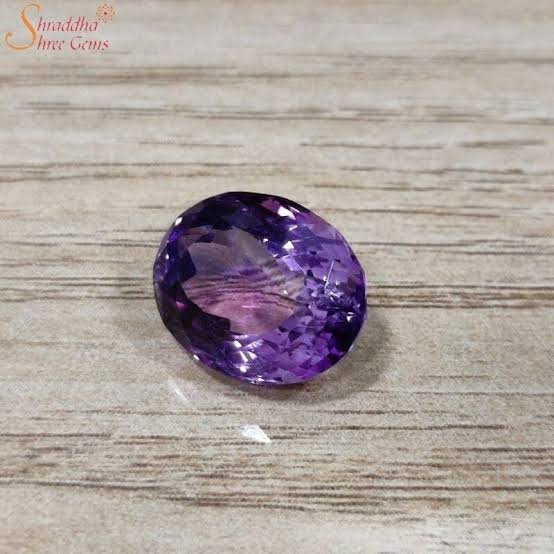
The product image accompanying this article shows a purple/violet faceted gemstone with an oval-style appearance and visible internal features. However, a photograph alone cannot establish whether a particular stone is natural, treated, synthetic, or laboratory-certified. For an informed purchase, buyers should consider gemstone disclosure, specifications, treatment information, and, where appropriate, an independent laboratory report.
This guide explains the properties, colour, formation, traditional significance, pricing factors, jewellery uses, care requirements, and buying considerations associated with Natural Amethyst.
What is Natural Amethyst Stone?
Amethyst is a purple variety of quartz, one of the most common and well-known minerals in the Earth’s crust. Its chemical composition is primarily silicon dioxide (SiO₂).
The purple colour of Amethyst is associated with trace amounts of iron and irradiation-related colour centres within the quartz crystal. Heating can alter or remove the purple colour, depending on the material and treatment conditions.
Natural Amethyst forms through geological processes, generally when quartz crystallizes in cavities and fractures within host rocks. It can occur as individual crystals, crystal clusters, geodes, or gem-quality material that is cut and polished for jewellery.
The term Natural Amethyst refers to Amethyst that has formed naturally in geological conditions. It should not automatically be interpreted as “untreated.” Natural gemstones can undergo certain treatments after mining, so buyers should distinguish between:
- Natural gemstone
- Treated natural gemstone
- Synthetic/laboratory-grown material
- Imitation or simulant
This distinction is particularly important when purchasing an Original Amethyst Stone for a significant investment.
Natural Amethyst Stone Properties
Amethyst belongs to the quartz mineral family and has several properties that make it suitable for jewellery.
| Property | Natural Amethyst |
|---|---|
| Mineral | Quartz |
| Chemical Composition | Silicon dioxide (SiO₂) |
| Crystal System | Trigonal |
| Mohs Hardness | 7 |
| Luster | Vitreous/glassy |
| Transparency | Transparent to translucent |
| Typical Colour | Light purple to deep violet |
| Common Forms | Crystals, geodes and faceted gemstones |
| Common Internal Features | Inclusions, fractures, colour zoning and growth features |
A Mohs hardness of approximately 7 gives Amethyst reasonable resistance to everyday scratching. Nevertheless, it is not scratch-proof and should be handled with care, particularly when worn in rings.
Luster and Transparency
Well-polished Amethyst generally displays a glass-like or vitreous luster. Gem-quality material can range from transparent to translucent.
Clarity can vary considerably. Some stones may appear relatively clean to the unaided eye, while others may contain visible internal features. Natural inclusions can be useful when evaluating a gemstone, but the presence or absence of inclusions alone cannot prove that a stone is natural.
Natural Amethyst Colors and Appearance
The most defining characteristic of Amethyst is its purple colour. Depending on the material, the colour may range from delicate lilac to rich violet.
Common shades include:
- Light purple
- Lilac
- Violet
- Deep purple
- Reddish-purple
Colour intensity and distribution can significantly influence the visual appeal of an Amethyst gemstone. A stone with attractive, well-distributed colour may appear more vibrant than a similarly sized stone with very pale or uneven colour.
Some Amethyst specimens display colour zoning, where different areas of the crystal show varying intensities of purple. Depending on the cut, orientation, and buyer preference, this can either add character or affect the desired appearance.
The gemstone shown in the supplied product image has a visibly purple/violet appearance and a faceted oval-style presentation. The photograph should be treated as a visual representation only; actual colour can vary because of lighting, camera settings, screen displays, and photography conditions.
How is Natural Amethyst Formed?
Natural Amethyst develops through geological processes involving quartz-rich solutions and suitable conditions inside rocks.
Amethyst is frequently associated with cavities, volcanic rocks, and geode formations. Over geological periods, silica-bearing fluids can enter cavities within rock. Under appropriate chemical and physical conditions, quartz crystals grow within these spaces.
Trace elements, irradiation, and the crystal’s geological environment contribute to the development of the characteristic purple colour.
After mining, suitable rough Amethyst may be selected, cut, shaped, polished, and transformed into jewellery gemstones.
Natural Amethyst vs Synthetic Amethyst
Natural and synthetic Amethyst can sometimes appear visually similar, especially in photographs. Synthetic quartz can be produced in controlled laboratory conditions, and colour can be introduced or developed to resemble natural Amethyst.
A visual inspection by an inexperienced buyer may therefore not always be sufficient.
| Factor | Natural Amethyst | Synthetic Amethyst |
|---|---|---|
| Formation | Formed naturally in geological conditions | Produced through controlled laboratory processes |
| Appearance | Purple/violet appearance with natural growth characteristics | Can closely resemble natural material |
| Inclusions | May contain natural inclusions, fractures or growth features | May show laboratory-related growth characteristics |
| Availability | Dependent on natural deposits and mining | Produced under controlled conditions |
| Identification | May require gemological examination | Professional testing can help establish origin |
| Value | Depends on quality, colour, size, treatment and other factors | Generally evaluated differently from natural material |
| Certification | May be supported by a laboratory report | A report may identify laboratory-grown/synthetic nature where tested |
Professional gemological testing may be necessary when establishing whether a gemstone is natural or synthetic and whether it has undergone certain treatments.
How to Identify a Genuine Natural Amethyst?
There is no single home test that can reliably establish every aspect of gemstone authenticity.
A practical approach is to evaluate several factors together:
- Buy from a credible seller with clear product disclosures.
- Ask whether the gemstone is natural or synthetic.
- Ask whether any treatment has been disclosed.
- Request the gemstone’s weight and dimensions.
- Examine the gemstone under suitable lighting.
- Look for consistent, professionally presented photographs.
- For important purchases, consider a gemological laboratory certificate.
- Check the invoice and product description for matching specifications.
- Understand the seller’s return or exchange policy.
Natural-looking inclusions should not automatically be considered proof of authenticity. Similarly, a very clean-looking gemstone is not automatically synthetic.
Natural Amethyst Quality Factors
When evaluating a Natural Amethyst, buyers should consider several characteristics rather than focusing on a single feature.
1. Colour
Colour is one of the most important visual factors. Purple intensity, hue, distribution, and saturation can affect the overall appearance.
2. Clarity
Clarity refers to the presence and visibility of internal features. Natural Amethyst can contain inclusions, fractures, colour zoning, or other characteristics.
3. Cut
The cut determines how the gemstone interacts with light. A well-executed cut can improve brilliance, visual balance, and overall presentation.
Common cuts include:
- Oval
- Round
- Cushion
- Emerald-style
- Pear
- Marquise
- Cabochon
The gemstone in the supplied image has an oval-style faceted appearance.
4. Carat Weight
Carat weight measures gemstone weight. Two Amethysts with the same carat weight can look different depending on their dimensions, cut, shape, and proportions.
5. Transparency
Transparent material generally provides a different visual appearance from translucent material. Buyers should consider transparency according to their intended use and personal preference.
6. Inclusions
Inclusions and internal features are part of the natural character of many gemstones. Their type, size, location, and visibility can influence appearance.
7. Polish
A quality polish helps create a smooth surface and allows the gemstone to reflect light effectively.
8. Treatment
Amethyst may be subjected to treatments such as heat treatment or other processes that alter its appearance. Treatment disclosure is therefore important when purchasing.
9. Origin
Geographic origin can sometimes be established through specialized laboratory examination, but it should not be assumed simply from colour or appearance.
10. Certification
For buyers seeking additional verification, an independent gemological report can provide useful information about the gemstone tested and the conclusions supported by the laboratory.
Natural Amethyst Price: What Determines Its Value?
There is no single fixed Natural Amethyst stone price.
Pricing can vary significantly depending on the quality and characteristics of an individual gemstone. Important factors include:
- Natural status
- Colour quality
- Colour intensity
- Clarity
- Size
- Carat weight
- Cut and proportions
- Transparency
- Treatment
- Origin, where established
- Certification
- Overall appearance
- Seller and market positioning
A large gemstone is not automatically more valuable than a smaller gemstone. Likewise, darker colour does not universally mean higher quality because hue, saturation, distribution, clarity, cut, and buyer preference all contribute to the final evaluation.
For this reason, buyers should compare gemstones using complete specifications rather than comparing prices based only on photographs.
Natural Amethyst in Jewellery
Amethyst is versatile and can be used in many types of jewellery.
Amethyst Rings
Rings can showcase Amethyst as a central gemstone. Protective settings can be particularly useful because rings experience more contact with surfaces than many other jewellery types.
Amethyst Pendants
Pendants are a popular option because the gemstone generally experiences less direct impact than a ring.
Amethyst Earrings
Matching or complementary Amethyst stones can be used in studs, drops, and other earring designs.
Amethyst Bracelets
Amethyst can be incorporated into gemstone bracelets using polished beads, faceted stones, or individual gemstone elements.
Amethyst Necklaces
Amethyst may be used as a centrepiece or combined with other gemstones and metals.
The choice of cut and setting depends on the desired style. Faceted stones are generally selected to enhance light reflection, while cabochons provide a smoother, more rounded appearance.
Natural Amethyst and Vedic Astrology
In Indian gemstone traditions, Jamuniya or Amethyst is traditionally discussed in the context of Vedic astrology.
Amethyst is commonly associated in traditional Indian astrology with Shani (Saturn) and is sometimes discussed as an alternative or substitute gemstone in contexts where Blue Sapphire is traditionally considered. However, gemstone recommendations vary among astrologers and traditions.
Some modern gemstone traditions may associate Amethyst with other planetary or spiritual concepts as well. Therefore, buyers should not treat one universal astrological rule as scientifically established.
According to traditional astrological belief, people may choose to wear Jamuniya based on factors such as:
- Birth chart
- Planetary positions
- Individual astrological interpretation
- Traditional gemstone practices
Astrological recommendations should be understood as traditional beliefs rather than scientifically proven effects.
Before wearing a gemstone specifically for astrological purposes, individuals who follow Vedic astrology may consult a qualified astrologer for a personalised interpretation.
Traditional Benefits of Natural Amethyst
Amethyst has a long history of symbolic and spiritual associations.
Traditionally, it has been connected with:
- Peace and calm
- Meditation
- Spiritual practices
- Reflection and mindfulness
- Emotional balance
- Inner awareness
These are traditional and spiritual beliefs, not established medical claims.
There is no reliable basis for presenting Amethyst as a guaranteed treatment for a health condition or as a replacement for professional medical care. Customers should therefore distinguish between gemstone symbolism and scientifically established health treatment.
Historically, Amethyst has also been valued by different cultures for its distinctive purple colour and symbolic associations, contributing to its enduring popularity as both an ornamental gemstone and a collector’s material.
How to Wear Natural Amethyst?
For regular jewellery use, Amethyst can be worn as:
- Ring
- Pendant
- Necklace
- Bracelet
- Earrings
The choice of jewellery depends primarily on personal style, comfort, and the intended use of the gemstone.
For astrological wearing practices, recommendations such as finger, metal, day, timing, and method can vary according to different Vedic astrology traditions. These practices should therefore be treated as traditional guidance rather than scientifically validated requirements.
When wearing Amethyst regularly, especially as a ring, it is sensible to protect it from hard knocks, abrasive surfaces, and activities where the gemstone could be damaged.
How to Clean and Care for Natural Amethyst?
Proper care helps preserve the gemstone’s appearance.
Recommended Cleaning
Use:
- Mild soap
- Lukewarm water
- A soft cloth
- A soft, non-abrasive brush when necessary
Gently clean the gemstone and rinse it thoroughly. Dry it using a soft cloth.
What to Avoid
Avoid:
- Harsh chemicals
- Abrasive cleaners
- Prolonged exposure to extreme heat
- Rough handling
- Contact with hard objects that may scratch or chip the gemstone
Amethyst has a Mohs hardness of 7, but hardness does not mean immunity from scratches or impact damage.
Storage
Store Amethyst jewellery separately from harder gemstones and metal items that could scratch its surface.
A soft jewellery pouch or individual compartment can help minimise contact with other pieces.
For rings and bracelets, consider removing the jewellery before activities involving heavy physical work, sports, gardening, cleaning chemicals, or potential impact.
Natural Amethyst Buying Guide
Before purchasing a Natural Jamuniya Stone, use this checklist:
Seller Credibility
Choose a seller that provides clear product descriptions and transparent disclosures.
Natural Status
Confirm whether the stone is natural, synthetic, or an imitation.
Treatment Disclosure
Ask whether the gemstone has undergone any treatment and whether that treatment is disclosed.
Weight and Dimensions
Request exact carat weight and measurements for the individual gemstone. These should come from the seller’s actual product specifications rather than being estimated from photographs.
Photographs
Look for clear photographs showing the gemstone from useful angles and under appropriate lighting.
Certification
For purchases where verification is important, ask whether a laboratory report is available and confirm that the report corresponds to the actual gemstone.
Return Policy
Read the return or exchange terms before completing the purchase.
Invoice
Keep a proper invoice containing the gemstone description and relevant specifications.
Avoid Unverified Claims
Be cautious about statements such as “100% guaranteed benefits,” “guaranteed wealth,” “guaranteed healing,” or unsupported claims about origin and rarity.
A trustworthy gemstone purchase should focus on what can be documented and verified.
Why Certification Matters
A gemstone certificate or laboratory report can provide additional confidence when it is issued for the actual stone being purchased.
Depending on the laboratory and type of examination, a report may address characteristics such as gemstone identity, natural or laboratory-grown status, and certain detectable treatments or observations.
However, a certificate should not be treated as a substitute for understanding the complete product specification.
When purchasing a valuable gemstone, check:
- Laboratory name
- Report number
- Stone description
- Weight
- Measurements
- Identification
- Treatment information, where reported
- Whether the report belongs to the exact gemstone being purchased
For lower-value purchases, buyers may decide that a certificate is not essential. For higher-value transactions or situations where authenticity is particularly important, independent gemological testing can be useful.
Frequently Asked Questions About Natural Amethyst
1. What is Natural Amethyst?
Natural Amethyst is a naturally formed purple variety of quartz. Its chemical composition is silicon dioxide (SiO₂), and its purple colour is associated with trace elements and irradiation-related colour centres.
2. Is Natural Amethyst the same as Jamuniya?
In the Indian gemstone market, Amethyst is commonly known as Jamuniya or Jamunia. The terms are often used for the same purple quartz gemstone, although astrological interpretations and naming conventions can vary.
3. How can I identify Natural Amethyst?
A photograph or simple home test cannot conclusively establish every aspect of authenticity. Professional gemological examination may be required to distinguish natural material from synthetic material and to evaluate certain treatments.
4. What is the price of Natural Amethyst?
There is no universal fixed price. Natural Amethyst pricing depends on colour, clarity, size, cut, carat weight, transparency, treatment, origin where established, certification, and overall quality.
5. Is Amethyst a birthstone?
Yes. Amethyst is widely recognized as the traditional birthstone for February.
6. Is Natural Amethyst suitable for jewellery?
Yes. With a Mohs hardness of approximately 7, Amethyst is commonly used in rings, pendants, earrings, bracelets, and necklaces. Reasonable care is recommended to prevent scratches and impact damage.
7. Can Amethyst be treated?
Yes. Natural Amethyst can undergo treatments that alter its appearance, including heat-related processes. Treatment disclosure is therefore an important part of a transparent gemstone purchase.
8. Does Natural Amethyst require a certificate?
Not every Amethyst purchase requires certification. However, a laboratory report can be useful when authenticity, natural status, treatment, or other gemological characteristics need independent verification.
9. How should Amethyst be cleaned?
Clean Amethyst gently with mild soap and lukewarm water, then dry it with a soft cloth. Avoid harsh chemicals, abrasive cleaners, and extreme heat.
10. What is the difference between Natural and Synthetic Amethyst?
Natural Amethyst forms through geological processes, while synthetic material is produced through controlled laboratory processes. They may look similar, so professional gemological testing can be useful when origin or authenticity is important.
Final Thoughts
A Natural Amethyst Stone combines distinctive purple colour, quartz durability, jewellery versatility, and a long history of traditional and spiritual significance. For first-time buyers as well as experienced gemstone enthusiasts, understanding colour, clarity, cut, weight, treatment, disclosure, and certification is more useful than relying on appearance alone.
The gemstone shown in the supplied product image presents an attractive purple/violet faceted appearance. Its photograph, however, should not be used to infer exact carat weight, dimensions, origin, treatment status, clarity grade, or certification. Those details should always be confirmed from the individual product specifications and, where applicable, a laboratory report.
Explore Natural Amethyst with Shraddha Shree Gems
If you are considering a Natural Amethyst, Shraddha Shree Gems can be approached for information about the available gemstone’s quality, authenticity, certification, weight, dimensions, treatment disclosure, and other product specifications.
For an informed purchase, ask for the specifications applicable to the individual Amethyst gemstone you are considering and review the available documentation before making your decision.
