

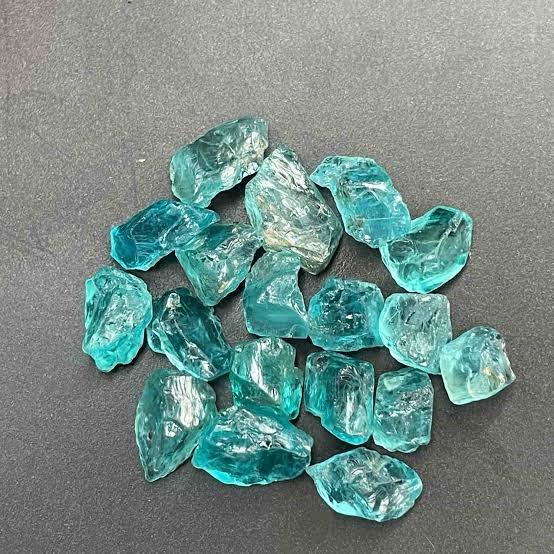
The Apatite gemstone is admired for its captivating colors, distinctive crystal formations, and appeal to both gemstone enthusiasts and mineral collectors. From vibrant electric blue and turquoise to refreshing teal and greenish-blue, Apatite offers a beautiful range of natural colors that make it an interesting addition to any gemstone collection.
Unlike familiar jewelry gemstones such as sapphire and aquamarine, Apatite remains a distinctive choice for people who appreciate unusual minerals and colorful crystal specimens. Its vivid blue-green shades can resemble tropical seawater, while its natural crystal formations reveal the fascinating processes that occur beneath the Earth’s surface.
Raw blue-green Apatite is particularly appealing because it preserves the mineral’s original form. Rather than displaying only a polished surface or faceted finish, rough Apatite can showcase natural crystal faces, irregular outlines, translucent areas, and variations in color.
Whether you are a mineral collector, jewelry designer, crystal enthusiast, or international gemstone buyer, understanding Apatite’s properties can help you make an informed purchase.
In this guide, we explore Apatite gemstone properties, colors, meaning, uses, geological origins, care requirements, pricing factors, and practical buying tips, with particular attention to natural-looking rough blue-green specimens.
What Is Apatite Gemstone?
Apatite is a group of calcium phosphate minerals found in igneous, sedimentary, and metamorphic rocks. It is an important mineral in geology and a source of phosphorus used in agricultural fertilizers.
In the gemstone trade, the name Apatite commonly refers to colorful material suitable for cutting into gemstones or displaying as mineral specimens. Fluorapatite is the most common mineral species associated with commercial Apatite gemstones.
Its general chemical formula is Ca₅(PO₄)₃(F,Cl,OH), reflecting the presence of fluorine, chlorine, or hydroxyl in different members of the group.
The name Apatite comes from the Greek word apatao, meaning to deceive. German mineralogist Abraham Gottlob Werner used the name because Apatite had historically been confused with other minerals.
Mineral Apatite vs. Gemstone-Quality Apatite
Mineral Apatite occurs in many geological environments, but not every specimen is suitable for jewelry.
Gem-quality Apatite is selected for attractive color, transparency, clarity, and the ability to withstand cutting and polishing. Rough specimens may instead be valued for crystal shape, color zoning, mineral associations, or display quality.
Apatite commonly forms hexagonal prismatic crystals, although it can also occur as granular masses and irregular mineral aggregates. Its original crystal structure makes rough specimens particularly attractive to collectors.
Apatite Gemstone Properties and Specifications
The following table summarizes the typical properties of Apatite, particularly fluorapatite commonly encountered in the gemstone trade.
| Property | Description |
|---|---|
| Gemstone name | Apatite |
| Mineral group | Apatite group; phosphate minerals |
| Chemical formula | Ca₅(PO₄)₃(F,Cl,OH) |
| Mohs hardness | Approximately 5 |
| Crystal system | Hexagonal |
| Luster | Vitreous to resinous |
| Transparency | Transparent to opaque |
| Refractive index | Approximately 1.63–1.65 for many gem varieties |
| Specific gravity | Commonly around 3.1–3.3 |
| Common colors | Blue, blue-green, green, yellow, violet, pink, brown, and colorless |
| Cleavage and fracture | Poor or imperfect cleavage; brittle, with uneven to conchoidal fracture |
| Common crystal forms | Hexagonal prisms, tabular crystals, granular masses, and irregular aggregates |
| Natural occurrence | Igneous and metamorphic rocks, pegmatites, hydrothermal veins, and sedimentary phosphate deposits |
These figures are representative values, not a guarantee for every specimen. Chemical composition, inclusions, treatments, and the specific Apatite variety can affect measured properties and appearance.
Apatite has a Mohs hardness of approximately 5, making it softer and more vulnerable to scratching than many popular jewelry gemstones.
For additional mineralogical information, consult the Mindat Apatite mineral database and the International Gem Society’s Apatite reference.
Colors of Apatite: From Neon Blue to Natural Green
One of the most appealing features of Apatite is its wide color range. Color, saturation, transparency, and overall condition contribute to the appearance and desirability of individual specimens.
1. Blue Apatite
Blue Apatite ranges from pale sky blue to deep ocean blue. Transparent examples may be faceted, while rough crystals appeal to collectors who prefer natural mineral formations.
2. Neon Blue Apatite
Neon Blue Apatite displays an especially vivid, electric-blue appearance. Some highly prized blue-green material from Madagascar is known for its intense color.
Blue and blue-green Apatite may be heat-treated, so buyers should request treatment information rather than assuming that vivid color is naturally occurring.
3. Turquoise Apatite
Turquoise-colored Apatite combines blue and green tones. Its tropical appearance makes it attractive for decorative displays, mineral collections, and selected jewelry designs.
The trade description refers to its color; it does not mean the mineral is turquoise.
4. Green Apatite
Green Apatite ranges from light yellowish-green to deeper forest-green shades. Its natural appearance works well in mineral displays and collections focused on green gemstones.
5. Yellow Apatite
Yellow Apatite can appear pale lemon, golden, or yellow-green. Transparent material may be cut into faceted stones.
6. Purple Apatite
Purple Apatite is less commonly encountered in everyday gemstone retail. Its violet tones can appeal to collectors looking for unusual colors.
7. Colorless Apatite
Colorless Apatite offers a relatively understated appearance. Transparent specimens can be faceted, although the mineral’s limited hardness and toughness remain important considerations.
8. Blue-Green Apatite
Blue-Green Apatite combines the cool tones of blue with green or teal undertones. In rough form, subtle color variations can contrast beautifully with natural crystal surfaces and irregular edges.
For collectors, value depends on more than color alone. Clarity, size, crystal quality, damage, treatment status, and market demand all matter.
Natural Apatite vs. Similar-Looking Gemstones
Blue and green Apatite can resemble several other gemstones. The following comparison explains their typical differences.
| Gemstone | Common colors | Mohs hardness | Appearance and distinguishing features |
|---|---|---|---|
| Apatite | Blue, blue-green, green, yellow | 5 | Often vitreous, with hexagonal crystals and a wide color range |
| Turquoise | Blue to green | 5–6 | Generally opaque, often with matrix patterns; may be stabilized or treated |
| Aquamarine | Pale blue to blue-green | 7.5–8 | A blue-green variety of beryl, typically transparent with elongated hexagonal crystals |
| Blue Topaz | Light to deep blue | 8 | Usually transparent and well suited to faceted jewelry |
| Amazonite | Blue-green to green | 6–6.5 | Commonly opaque to translucent, with a feldspar-like appearance |
| Fluorite | Purple, green, blue, and other colors | 4 | Often forms cubic crystals and has prominent cleavage |
Hardness ranges are approximate and refer to the minerals themselves, not to a guarantee of practical durability.
Important: Color alone cannot establish gemstone identity. Several minerals can look similar, and treatments can alter appearance. Reliable identification may require refractive-index measurements, microscopic examination, spectroscopy, or other appropriate gemological testing.
Where Is Apatite Found?
Apatite occurs worldwide, although particular localities are known for producing attractive crystals or material suitable for gemstones.
Notable sources and localities include:
- Brazil: Known for a range of gem-quality Apatite, including blue, yellow-green, and colorless material.
- Madagascar: An important source of vivid blue and blue-green gemstone material, including neon-colored specimens.
- Mexico: Known for Apatite deposits and gem-quality material, including yellow varieties.
- Myanmar: Produces gem-quality material in several colors.
- Canada: Known for significant mineral occurrences and notable crystals, particularly in Ontario.
- Russia: Has Apatite occurrences associated with a variety of geological environments.
- Other localities: Apatite is also documented in countries including South Africa, Germany, India, and Norway.
Apatite can crystallize in pegmatites, hydrothermal veins, igneous rocks, and metamorphic environments. Geological conditions and trace elements can influence its color, crystal size, inclusions, and transparency.
However, a gemstone’s appearance cannot reliably establish its country of origin. The source of a particular product should be stated only when supported by reliable supplier records or appropriate documentation.
Raw Apatite: Features, Uses, and Collector Appeal
Raw Apatite, also called rough Apatite, is mineral material that has not been fully fashioned into a polished gemstone. It may retain natural crystal faces, broken terminations, uneven surfaces, or portions of its surrounding matrix.
What Makes Rough Blue-Green Apatite Special?
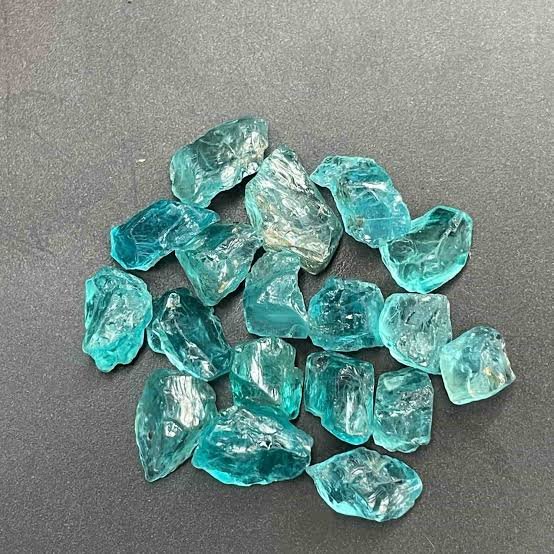
Raw blue-green Apatite offers a different experience from a polished or faceted stone. Its appeal comes from the combination of color, texture, transparency, and natural form.
Depending on the specimen, buyers may notice:
- Blue, turquoise, teal, or greenish-blue coloration.
- Transparent or translucent areas.
- Hexagonal crystal faces or irregular natural outlines.
- Internal inclusions, fractures, or color zoning.
- Contrasts between smooth crystal faces and rough broken surfaces.
Not every specimen displays all these features. Natural crystals vary considerably, and fractures or irregularities should be described accurately rather than automatically presented as indicators of superior quality.
Common Uses of Raw Apatite
Rough Apatite is suitable for several purposes:
Mineral collections: Collectors appreciate its color, crystal habit, and geological significance.
Decorative displays: Selected specimens can be displayed on shelves, desks, display stands, or in mineral cabinets.
Educational collections: Apatite helps illustrate phosphate minerals, crystal systems, mineral identification, and geological processes.
Lapidary projects: Suitable material may be cut and polished by experienced lapidaries. However, its brittleness and moderate hardness require careful handling.
Jewelry projects: Selected rough pieces may be incorporated into suitable designs, provided their shape, stability, and intended use are considered.
When purchasing rough Apatite, evaluate its dimensions, weight, crystal condition, visible fractures, transparency, and intended application.
A specimen for a display collection may be desirable because of its crystal form, while material intended for cutting may require different characteristics.
If you are buying raw blue-green Apatite for a collection or decorative display, request clear photographs of the actual specimen and ask for its verified specifications before purchasing.
Apatite Gemstone Meaning and Symbolism
Apatite has developed a place in modern crystal culture because of its vivid colors and association with personal expression, creativity, and growth.
These meanings are cultural and symbolic interpretations rather than scientifically established properties of the mineral.
Blue Apatite Meaning
In crystal communities, Blue Apatite is commonly associated with communication, inspiration, mental clarity, and self-expression. Its blue color is often interpreted as a symbol of calmness and openness.
Green Apatite Meaning
Green Apatite is frequently associated with renewal, personal development, balance, and new beginnings. Its green shades evoke natural landscapes and plant growth.
Blue-Green Apatite Meaning
Blue-Green Apatite combines these symbolic associations, making it popular among people who enjoy crystals as reminders of creativity, change, and personal intentions.
These interpretations can add personal significance to a collection, but they should not be confused with verified scientific effects.
Apatite Benefits: What Should Buyers Know?
The benefits commonly attributed to Apatite depend on whether the discussion concerns its physical characteristics, decorative value, or metaphysical symbolism.
Common Crystal-Community Beliefs
Some crystal enthusiasts associate Apatite with:
- Creativity: A symbolic reminder to explore ideas and artistic interests.
- Motivation: A personal symbol of pursuing goals and developing new habits.
- Communication: An object associated with confidence and self-expression.
- Focus: A reminder to maintain attention during work or meditation.
- Personal growth: A representation of learning and positive change.
People may incorporate Apatite into meditation spaces, personal collections, or decorative arrangements because they appreciate its appearance and symbolic meaning.
However, there is no strong scientific evidence that Apatite crystals provide healing, treat medical conditions, improve mental performance, or produce specific physical or psychological benefits. These associations should be understood as personal beliefs, not medical advice.
Its established appeal lies in its mineralogical interest, attractive colors, geological importance, and potential use in jewelry and collecting.
Apatite Uses: From Jewelry to Industrial Applications
Apatite has several uses, but its applications depend on the material’s quality and composition.
1. Gemstone Jewelry
Transparent, attractive Apatite can be faceted into gemstones for pendants, earrings, rings, and other jewelry. Its bright blue and green colors are particularly appealing.
2. Mineral and Crystal Collections
Raw Apatite is collected for its crystal formations, colors, and geological significance. Well-formed specimens can be displayed alongside other phosphate minerals.
3. Decorative Displays
Selected rough specimens can add natural color and texture to homes, offices, mineral cabinets, and display arrangements.
4. Lapidary and Gemstone Cutting
Experienced lapidaries may cut suitable Apatite into faceted stones, cabochons, or other decorative forms. Its brittleness and moderate hardness require careful handling during cutting, polishing, and setting.
5. Educational and Geological Collections
Apatite is an important example of a phosphate mineral. It is useful in teaching mineral classification, crystal structures, rock formation, and the geological distribution of phosphorus.
6. Industrial Phosphate Applications
Industrial Apatite-bearing phosphate rock is a major source of phosphorus used in fertilizer production and other industrial processes.
Gem-quality crystals and industrial phosphate-bearing material serve different markets. Their selection criteria, processing methods, and commercial values are not interchangeable.
For additional information, see the U.S. Geological Survey’s phosphate rock resources.
Apatite Jewelry and Styling Tips
Apatite’s vibrant color makes it an attractive option for distinctive jewelry, particularly when the stone is protected from excessive wear.
Popular Apatite Jewelry Designs
- Pendants: A practical choice because the stone generally experiences less abrasion than a ring.
- Earrings: Showcase the bright color while limiting contact with hard surfaces.
- Necklaces: Faceted Apatite beads or individual gemstones can create colorful designs.
- Bracelets: Attractive, although repeated contact with other objects can cause scratches or chips.
- Rings: Best suited to occasional wear and protective settings rather than demanding daily use.
Styling Blue-Green Apatite
Blue-green Apatite pairs beautifully with silver-colored metals, white gold, yellow gold, and complementary neutral tones.
Its tropical colors can also work well alongside white gemstones or contrasting dark accents.
Choosing the Right Setting
Because Apatite has a Mohs hardness of approximately 5 and is relatively brittle, protective settings are worth considering. Bezel settings or designs that shield exposed edges can help reduce damage.
Sapphire and diamond are considerably harder, making them better suited to jewelry exposed to frequent abrasion. Even so, hardness is only one part of gemstone durability; toughness, cleavage, setting design, and wearing conditions also matter.
For Apatite jewelry, avoid wearing the stone during sports, manual work, or activities that involve repeated impacts.
How to Identify Genuine Apatite
Apatite occurs in several colors and can resemble other gemstones, so identification should not rely on color alone.
Features to Examine
Color and transparency: Apatite may be blue, blue-green, green, yellow, violet, or colorless. It can range from transparent to opaque.
Crystal form: Hexagonal prismatic crystals are characteristic of many Apatite specimens, although other forms occur.
Luster: Fresh surfaces commonly show a vitreous, or glass-like, luster.
Hardness: Apatite has a Mohs hardness of approximately 5. This is useful in professional identification but should not be tested by scratching a specimen at home.
Internal characteristics: Inclusions, fractures, growth features, and color zoning can provide useful information to an experienced gemologist.
Natural, Treated, and Imitation Apatite
Natural Apatite forms through geological processes. Some material may subsequently receive treatments, including heat treatment, to change its color or appearance.
Imitations are different materials that resemble Apatite visually. Laboratory-grown Apatite also exists, although its presence in a particular commercial product should not be assumed without evidence.
Buyers should ask whether the material is natural, whether treatments are known, and whether any laboratory documentation is available.
A qualified gemologist can use appropriate testing methods to help distinguish Apatite from look-alike minerals and assess suspected treatments. Where the distinction is commercially important, an independent gemological laboratory may provide additional confidence.
Avoid destructive home tests. Scratching, heating, or applying chemicals can damage the specimen without reliably establishing its identity.
How to Clean and Care for Apatite
Proper care helps preserve the appearance of Apatite, particularly when dealing with rough specimens or faceted jewelry.
Recommended Cleaning Method
For suitable untreated, intact specimens:
- Remove loose dust with a soft, dry cloth or a gentle brush.
- If the material is known to tolerate moisture, use lukewarm water and a small amount of mild soap.
- Clean gently without rubbing hard against the surface.
- Rinse carefully if appropriate.
- Dry with a soft cloth and allow the specimen to dry fully before storage.
Do not assume that every rough specimen is safe to wash. Coatings, fractures, attached matrix material, soluble minerals, and previous treatments may require a different approach.
What to Avoid
- Ultrasonic cleaners: Vibrations can damage brittle or fractured Apatite.
- Steam cleaning: Heat and rapid temperature changes can cause damage.
- Harsh chemicals: Acids, strong cleaners, and solvents may harm the specimen or its treatments.
- Sudden temperature changes: Thermal shock can worsen existing fractures or cause breakage.
- Rough handling: Crystal edges and exposed terminations can chip.
Storage Tips
Store Apatite separately from harder gemstones such as sapphire, topaz, and diamond. Individual soft pouches or padded compartments can reduce accidental scratching and impacts.
For rough Apatite, use a stable display stand or padded storage box, particularly if the specimen has projecting crystal points or fragile edges.
Apatite Gemstone Price and Value Factors
The price of Apatite varies considerably according to material quality, form, size, treatment status, and market demand. Rough mineral specimens and faceted gemstones should be evaluated separately.
What Influences Apatite Price?
| Factor | Why it matters |
|---|---|
| Color | Attractive, well-saturated blue and blue-green colors may increase desirability. |
| Transparency and clarity | Transparent material with appealing clarity may be suitable for faceting. |
| Size and weight | Larger specimens can attract interest, although size alone does not guarantee greater value. |
| Cut quality | Faceted gemstones are evaluated for proportions, polish, symmetry, and appearance. |
| Crystal form | Well-defined crystals, attractive terminations, and overall condition can influence specimen value. |
| Treatment status | Disclosed treatments may affect how a stone is evaluated and compared with untreated material. |
| Origin | A documented locality may add collector interest where provenance is commercially relevant. |
| Demand and seller credibility | Market conditions, documentation, accurate descriptions, and seller transparency influence purchasing decisions. |
There is no single price that applies to all Apatite.
A small but well-formed rough crystal may appeal to a mineral collector, while a transparent, brightly colored faceted stone may appeal to a jewelry buyer. These products serve different purposes and cannot be compared solely by weight.
For international purchases, also consider shipping costs, insurance where available, packaging, applicable taxes, and import requirements.
Apatite Buying Guide: How to Choose the Right Specimen
Whether you are buying Blue Apatite for a collection or rough blue-green material for a decorative display, careful evaluation helps you choose a specimen that matches your expectations.
What to Check Before Buying Apatite
- Color: Confirm whether the specimen is blue, turquoise, teal, greenish-blue, or another shade.
- Surface condition: Ask about chips, broken terminations, fractures, and visible damage.
- Crystal features: Look for the natural formations and surface characteristics that interest you.
- Transparency: Check whether the specimen is transparent, translucent, or opaque.
- Size and weight: Review actual measurements and weight rather than relying on photographs.
- Treatment disclosure: Ask whether treatments are known and whether the seller has supporting information.
- Product photographs: Request clear photographs of the actual specimen from several angles when possible.
- Seller reputation: Look for consistent product descriptions, responsive communication, and transparent policies.
- Packaging: Confirm that the specimen will be protected against impact during shipping.
- International delivery: Verify shipping destinations, delivery estimates, customs responsibilities, and return policies.
Buying Rough Apatite for Wholesale or Retail
Retail buyers may prioritize individual appearance, display quality, and suitability for a personal collection.
Wholesale buyers may additionally consider consistency across a parcel, grading criteria, unit weight, packaging requirements, documentation, and repeat availability.
Before placing a large order, request representative photographs, a written specification, and confirmation of the available quantity. Do not assume that every specimen will have identical color, crystal shape, or transparency.
Clear product information benefits both buyers and sellers by helping establish realistic expectations.
Why Choose Our Apatite?
Discover the distinctive appeal of our raw blue-green Apatite, selected for its attractive color and natural-looking mineral form.
Blue-green Apatite offers a refreshing combination of blue and green tones that can complement a mineral collection, decorative display, or educational specimen arrangement. Its irregular forms and natural crystal features provide visual character that differs from the uniform appearance of polished gemstones.
Whether you are expanding a personal collection, sourcing mineral specimens for retail, or exploring decorative crystal materials, we invite you to review the available product details and select a specimen suited to your needs.
Because natural minerals can vary in color, shape, transparency, and surface condition, we recommend confirming the specifications of the actual item before purchasing.
Product Specifications
- Product Name: Raw Blue-Green Apatite
- Product Origin: [Add verified origin]
- Treatment Status: [Add verified details]
- Available Sizes: [Add sizes]
- Weight: [Add actual weight]
- Packaging: [Add packaging details]
- Wholesale Availability: [Add availability]
- Shipping Destinations: [Add supported destinations]
- Additional Documentation: [Add available documentation, if applicable]
Contact our team for product photographs, verified specifications, wholesale enquiries, and shipping information.
We believe that clear descriptions and accurate product details are essential to building lasting relationships with gemstone collectors, retailers, and international buyers.
Frequently Asked Questions About Apatite Gemstone
1. What is Apatite gemstone?
Apatite is a group of calcium phosphate minerals found in various geological environments. It occurs in colors including blue, green, yellow, violet, and colorless. Transparent material can be cut into gemstones, while rough crystals are popular among mineral collectors.
2. Is Apatite a natural gemstone?
Yes. Natural Apatite forms through geological processes and is used in jewelry and mineral collections. However, individual products may have been treated, and laboratory-grown Apatite also exists. Buyers should confirm the material’s identity and treatment status with the seller.
3. What colors does Apatite come in?
Apatite occurs in blue, neon blue, turquoise, blue-green, green, yellow, violet, pink, brown, and colorless varieties. Its precise appearance depends on its composition, inclusions, and other characteristics.
4. Is Blue Apatite rare?
Apatite as a mineral is widespread, but attractive, transparent, intensely colored Blue Apatite is less commonly encountered than ordinary mineral-grade material. The desirability of an individual specimen depends on its color, clarity, size, condition, and other quality factors.
5. Is Apatite suitable for everyday jewelry?
Apatite is relatively soft and brittle, so it is not ideal for jewelry exposed to frequent impacts and abrasion. Pendants and earrings are generally more practical than everyday rings. Protective settings and careful handling can help reduce damage.
6. How hard is Apatite on the Mohs scale?
Apatite has a Mohs hardness of approximately 5. It can be scratched by harder materials and requires more careful handling than gemstones such as sapphire, topaz, and diamond.
7. How do you clean Apatite?
For suitable, intact specimens, use lukewarm water, mild soap, and a soft cloth or brush. Avoid ultrasonic cleaners, steam cleaning, harsh chemicals, and sudden temperature changes. Specimens with coatings, fractures, or attached matrix material may require specialized care.
8. What is raw Apatite used for?
Raw Apatite is used in mineral collections, decorative displays, geological education, and selected lapidary projects. Suitable specimens may also be incorporated into jewelry designs. Their appeal often comes from natural crystal shapes, color, and texture.
9. How can you identify genuine Apatite?
Apatite can display characteristic colors, a vitreous luster, and hexagonal crystal forms. However, other minerals can look similar. Reliable identification may require professional gemological testing. Avoid scratching or applying chemicals to a specimen as a home identification method.
10. What factors affect Apatite’s price?
Apatite price depends on color, transparency, clarity, size, condition, cut quality, treatment status, and market demand. For rough specimens, crystal form and damage can be especially important. Documented origin may also influence value when relevant to collectors.
11. Is Apatite the same as Turquoise?
No. Apatite and turquoise are different minerals with different chemical compositions. Both can display blue or greenish-blue colors, but their physical characteristics and mineral structures differ. Visual similarity alone cannot establish identity.
12. Where is Apatite found?
Apatite occurs worldwide. Important gemstone-producing regions include Brazil, Madagascar, Mexico, and Myanmar, while notable mineral occurrences are also documented in Canada, Russia, Germany, and other countries. The origin of an individual specimen should be verified rather than inferred from its color or appearance.
Conclusion: Discover the Appeal of Apatite Gemstone
The Apatite gemstone stands out for its remarkable color range, interesting crystal structures, and versatility across gemstone collecting, jewelry, and mineral displays.
From vivid Blue Apatite to turquoise, teal, and greenish-blue varieties, this mineral offers something for collectors and enthusiasts with different interests. Raw Apatite is particularly appealing because it preserves the natural forms and textures created by geological processes.
Understanding Apatite gemstone properties, hardness, care requirements, identification, and price factors helps buyers make more informed decisions. It is equally important to request accurate product specifications, verify treatment disclosures, and choose a seller who describes each specimen honestly.
Whether you are purchasing your first Apatite crystal or sourcing rough mineral specimens for a gemstone business, prioritizing verified information and realistic expectations will help you find material that suits your needs.
Explore our raw blue-green Apatite collection to discover its distinctive natural appearance, and contact our team for verified product specifications, availability, and wholesale enquiries.
