


Emerald Gemstone Guide: Origin, Color, Quality, Value & Care
Meta Title: Emerald Gemstone: Complete Guide to Quality, Origin & Value
Meta Description: Discover everything about Emerald gemstones—from Colombian, Zambian and Brazilian origins to color, clarity, inclusions, treatments, value, authenticity and care.
URL Slug: /emerald-gemstone-complete-guide
H1: Emerald Gemstone: Complete Guide to Origin, Color, Quality, Value & Care
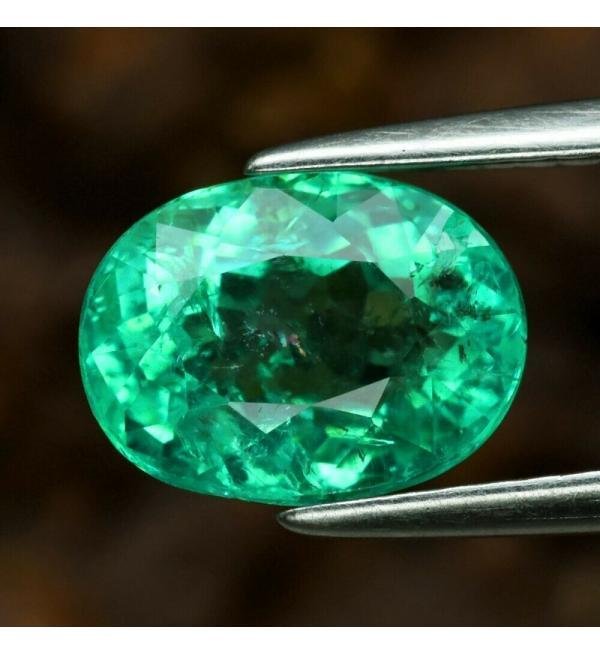
Image Alt Text: Faceted oval Emerald gemstone showing a rich green body color and natural internal characteristics
Primary Keyword: Emerald gemstone
Secondary Keywords: Natural Emerald, Emerald stone, Emerald gemstone origin, Emerald color, Emerald shades, Emerald quality, Emerald price, Colombian Emerald, Zambian Emerald, Brazilian Emerald, Natural Panna, Panna stone, Emerald gemstone benefits
Introduction to Emerald
Few gemstones have the visual presence of an Emerald. Its green is immediately recognizable, yet no two fine Emeralds look quite alike. Some display a cool, slightly bluish green; others have a warmer, pure green appearance. Many contain visible internal features that would be considered imperfections in other gemstones but are accepted—and sometimes celebrated—as part of Emerald’s natural character.
An Emerald gemstone is the green to bluish-green variety of beryl, the same mineral species that includes aquamarine. Its chemical formula is Be₃Al₂Si₆O₁₈, while trace elements—principally chromium and/or vanadium, with iron also influencing color—create the characteristic green appearance. Emerald has a Mohs hardness of approximately 7.5 to 8.
Emerald is considered one of the traditional precious gemstones, alongside ruby, sapphire and diamond. Its appeal is not based on hardness alone. The combination of saturated green color, transparency, rarity, crystal character and historical importance gives a fine Natural Emerald its distinctive position in the colored-stone market.
One of Emerald’s most fascinating characteristics is its internal world. Natural Emeralds commonly contain fissures, fluid inclusions and mineral crystals. Gemologists and the trade often refer to this characteristic internal landscape as jardin, French for “garden.”
Visual note: The supplied product image may be used to illustrate the appearance of a faceted Emerald, including its apparent green color, oval/faceted form, transparency and visible internal characteristics. The photograph alone should not be used to assign origin, treatment, natural status, quality grade, carat weight or value.
Where Do Emeralds Come From?
Emerald has been mined from a remarkable range of geological environments. Famous historical sources include Colombia, while important modern production also comes from Zambia, Brazil, Ethiopia, Afghanistan and Pakistan.
Importantly, Emerald gemstone origin is not a simple quality ranking. A Colombian Emerald is not automatically more valuable than a Zambian Emerald, nor does an Ethiopian or Brazilian Emerald automatically represent a lower quality. Individual color, clarity, transparency, size, treatment and beauty remain fundamental.
Colombia
Colombia is perhaps the world’s most famous Emerald source, with important mining districts including Muzo, Chivor and Coscuez. Colombian Emeralds are historically associated with attractive green color and distinctive inclusion features.
Many Colombian Emeralds formed in hydrothermal environments associated with unusual geological conditions. Classic three-phase fluid inclusions containing liquid, gas and a crystalline phase can occur, while minerals such as calcite and pyrite may also be encountered.
The phrase Colombian Emerald therefore describes geographic provenance, not a universal quality grade. Colombian mines produce a broad range of qualities.
Zambia
Zambia, particularly the Kafubu area, is one of the world’s important modern Emerald sources. Zambian Emeralds are frequently associated with green to bluish-green colors and can show relatively dark, saturated appearances.
Their geological setting differs from that of Colombian Emeralds. Zambian material belongs broadly to the schist-hosted group of Emerald deposits, alongside sources such as Brazil and Ethiopia. These Emeralds commonly contain blocky or irregular fluid inclusions and mica-related mineral inclusions.
Brazil
Brazil has been an important Emerald producer since discoveries in the 1970s. Significant deposits include areas of Minas Gerais, with Capoeirana and Belmont among the notable producing regions.
Brazilian Emeralds can display attractive green color and a range of transparency. Their inclusion characteristics may overlap with those of Zambian and Ethiopian Emeralds, which is why origin determination cannot reliably be based on one inclusion alone.
Ethiopia
Ethiopia emerged as an important modern Emerald source after significant discoveries in the southern part of the country in the 2010s.
Ethiopian Emeralds show considerable variation. Some material is relatively light and clean, while other stones can display rich green color. Color zoning, cloudy areas, fluid inclusions and mica are among the features reported in studied material.
Because Ethiopian, Zambian, Brazilian and other schist-hosted Emeralds can share characteristics, sophisticated laboratory testing may be necessary for a reliable origin determination.
Afghanistan
Afghanistan has produced Emeralds associated particularly with the Panjshir Valley. Afghan Emeralds belong to the hydrothermal/metamorphic group of deposits and can show inclusion characteristics that overlap with Colombian material.
This is an important reminder that origin determination is analytical work—not simply visual recognition. GIA notes that some inclusion features once strongly associated with Colombia can also occur in Afghan and other Emeralds.
Pakistan
Pakistan’s best-known Emerald locality is the Swat Valley, where Emeralds have been commercially important for decades.
GIA research has documented Swat Emeralds ranging from light to dark slightly bluish green, with characteristic fluid and mineral inclusions. Some material also exhibits unusual trapiche-type growth patterns.
Zimbabwe
Zimbabwe has produced Emerald material from several localities, although it is less prominent in consumer conversations than Colombia or Zambia. As with other less frequently encountered origins, provenance should be established through gemological examination rather than assumed from appearance.
Other Notable Sources
Other Emerald occurrences include Russia, Madagascar, China and historical Egyptian deposits. The global distribution of Emerald reflects the unusual geological conditions required to bring beryllium together with chromium and/or vanadium-bearing environments.
Emerald Color & Color Shades
For an experienced gemologist, Emerald color is usually the starting point of quality assessment.
Three concepts are especially important:
- Hue: the basic color, such as green, bluish green or yellowish green.
- Tone: how light or dark the color appears.
- Saturation: the strength or intensity of the color.
Fine Emeralds generally show a convincing green hue with strong saturation and a tone that supports, rather than overwhelms, the color. GIA describes desirable Emerald color as ranging from bluish green to pure green, with vivid saturation and a tone that is not excessively dark.
Common Emerald shades include:
| Emerald shade | General appearance |
|---|---|
| Light green | Fresh, delicate green; often more transparent |
| Medium green | Balanced body color with good visual presence |
| Vivid green | Strong, saturated green with high visual impact |
| Deep green | Darker body color; can be impressive when transparency remains good |
| Bluish green | Green with a noticeable cool blue component |
| Yellowish green | Warmer green appearance |
There is no single “correct” green for every buyer. The key is the interaction of hue, tone, saturation and transparency.
Color can also vary within the same geological source. Consequently, origin should never substitute for an examination of the individual gemstone.
Emerald Clarity & Inclusions
If you are accustomed to diamonds, Emerald requires a change in perspective.
A high-quality Emerald is not necessarily one that is completely free of inclusions. In fact, eye-clean Natural Emeralds are unusually rare. Visible inclusions are so characteristic that the trade commonly accepts them as part of the gemstone’s identity.
What Is Emerald Jardin?
Jardin refers to the mossy, garden-like appearance created by inclusions, fissures and internal features within an Emerald.
Under magnification, an Emerald may reveal:
- Fluid inclusions
- Partially healed fractures
- Mineral crystals
- Mica
- Calcite
- Pyrite
- Cloud-like concentrations
- Growth structures
- Surface-reaching fissures
Some inclusions are visually attractive and contribute to the personality of the stone. Others can reduce transparency or create durability concerns.
Internal Fractures
Fractures are particularly important because Emeralds can be relatively brittle compared with their hardness. A fracture that reaches the surface can create both a visual and structural concern.
An Emerald with numerous interconnected or prominent fractures may appear hazier and may require greater care during setting, wear and cleaning.
The important distinction is therefore not simply “included versus clean.” It is how the inclusions affect beauty, transparency and durability.
Emerald Quality Factors
Professionals consider several characteristics together when assessing Emerald quality.
| Quality factor | What it influences |
|---|---|
| Color | Often the strongest influence on visual appeal and value |
| Clarity | Affects transparency and the visibility of internal features |
| Transparency | Determines how easily light travels through the stone |
| Cut | Influences color presentation, brilliance, proportions and durability |
| Carat weight | Larger fine-quality stones can be substantially rarer |
| Origin | Can add provenance information and market significance |
| Treatment | The type and degree of clarity enhancement can affect value |
| Overall beauty | Considers the combined visual effect rather than one isolated feature |
| Durability | Fractures and structural weaknesses affect suitability for jewelry |
The crucial principle is that Emerald quality is holistic. A slightly included stone with exceptional color and transparency may be considerably more appealing than a larger stone with weaker color and heavy opacity.
Emerald Treatments
Treatment is an important part of Emerald buying.
Because natural Emeralds frequently contain surface-reaching fissures, clarity enhancement is common. Fillers are introduced into fractures to make them less visible and improve apparent clarity. Common materials include oils, waxes, natural resins and artificial resins.
Cedar Oil and Oiling
Cedarwood oil is traditionally associated with Emerald clarity enhancement. Oil enters surface-reaching fissures and reduces their visibility by changing the optical contrast between the fracture and the surrounding Emerald.
Traditional oiling is an accepted treatment when properly disclosed.
Resin and Other Fillers
Modern Emerald treatments can involve artificial resins or other filling substances. These can behave differently from traditional oils and may be more difficult to remove.
SSEF reports treatment by identifying the filler and describing its amount at the time of examination, using categories such as none, minor, moderate or significant.
Why Treatment Disclosure Matters
Treatment can influence appearance, durability considerations, care requirements and commercial value. CIBJO emphasizes disclosure of gemstone modifications, while recognized laboratories document treatment information in their reports.
Natural vs Synthetic vs Imitation
These terms should not be confused:
Natural Emerald: Formed by geological processes in nature.
Treated Natural Emerald: A natural Emerald that has undergone a treatment such as fissure filling.
Synthetic/Laboratory-Grown Emerald: Manufactured material with essentially the same chemical and physical characteristics as natural Emerald, but grown artificially.
Imitation/Simulant: A different material used to imitate the appearance of Emerald.
CIBJO recommends clear terminology for synthetic materials, and a professional laboratory report can distinguish natural from synthetic material.
Emerald Cuts & Shapes
Emerald’s crystal structure and characteristic inclusions influence how cutters approach the rough.
Emerald Cut
The rectangular step cut known as the Emerald cut is strongly associated with the gemstone. Its broad, parallel facets create a sophisticated appearance and can emphasize body color and transparency.
Oval
Oval Emeralds can offer a graceful outline while retaining substantial face-up presence. An oval cut can also make the green color appear more concentrated depending on its proportions.
Cushion
Cushion shapes combine softened corners with substantial color presentation. They are particularly useful when the rough does not naturally favor a rectangular outline.
Pear
Pear-shaped Emeralds offer a distinctive teardrop silhouette and can be effective in pendants and statement rings.
Round
Round Emeralds are less conventional but can create an elegant, compact appearance.
Fancy Shapes
Emeralds may also be cut as:
- Octagons
- Trillions
- Marquise shapes
- Hexagons
- Cabochons
- Custom free-form shapes
Cutting involves compromise. The cutter must balance color retention, transparency, light return, yield and durability rather than simply maximizing brilliance.
How Much Is an Emerald Worth?
There is no meaningful single Emerald price.
Two Emeralds weighing exactly one carat can have dramatically different values because their color, transparency, clarity, treatment, origin and overall beauty can differ substantially.
GIA notes that Emerald values can range from relatively modest amounts to extremely high values per carat depending on quality.
Major value factors include:
- Color – hue, tone and saturation.
- Clarity – especially the effect of inclusions on transparency.
- Transparency – highly transparent material is uncommon.
- Carat weight – fine large Emeralds can be particularly rare.
- Origin – documented provenance may contribute to desirability and value.
- Treatment – type and degree of clarity enhancement matter.
- Cut – proportions and visual performance affect appeal.
- Certification – an independent report can establish identity, treatment and, where offered, origin.
- Overall beauty – the combined visual impression remains essential.
A certificate does not create quality by itself. It provides independent information that helps a buyer understand what they are purchasing.
Colombian vs Zambian vs Brazilian Emeralds
The following comparison describes general tendencies, not absolute rules.
| Characteristic | Colombian Emerald | Zambian Emerald | Brazilian Emerald |
|---|---|---|---|
| Typical color tendency | Green to bluish/pure green, often associated with warmer green appearances | Often bluish green to green and can be darker in tone | Broad range of green shades |
| Typical inclusions | Jagged multiphase fluid inclusions, calcite, pyrite and other minerals | Blocky/irregular fluid inclusions, mica and other minerals | Fluid inclusions, mica and varied mineral features |
| Appearance | Can show highly attractive saturated green and distinctive internal scenes | Can combine strong saturation with darker or cooler green appearances | Wide range of appearance depending on locality |
| Transparency | Highly variable | Highly variable | Highly variable |
| Geological environment | Hydrothermal/metamorphic | Schist-hosted/magmatic-related | Schist-hosted/magmatic-related |
| Market recognition | Historically exceptional provenance recognition | Major modern producing source | Established international source |
GIA emphasizes that characteristics overlap between origins and that accurate geographic origin determination can require microscopy, spectroscopy and trace-element analysis.
How to Identify a Natural Emerald
A gemstone photograph—even a very good one—cannot reliably establish whether an Emerald is natural.
Visual examination can provide clues, but professional identification may require:
- Microscopic examination
- Refractive-index measurements
- Specific gravity
- Spectroscopy
- UV-Vis-NIR analysis
- FTIR or Raman analysis
- Trace-element chemistry
- Comparison with reference databases
For geographic origin, laboratories such as GIA and SSEF use combinations of microscopic characteristics, chemical data and spectroscopy rather than relying on one visual feature.
What Should an Emerald Report Tell You?
Depending on the laboratory and report type, look for information regarding:
- Natural or synthetic identification
- Gemstone variety
- Treatment or clarity enhancement
- Amount/type of filler where reported
- Geographic origin, if requested and determinable
- Report number and verification facility
- Photograph or identifying characteristics
An origin determination is an expert laboratory opinion and can occasionally be reported as inconclusive when the analytical evidence does not uniquely match a source.
How to Buy an Emerald: Practical Checklist
Before purchasing an Emerald stone, ask:
Identity
- Is it a Natural Emerald?
- Could it be synthetic or an imitation?
Treatment
- Has clarity enhancement been disclosed?
- Is the stone oil-filled, resin-filled or otherwise treated?
- How much filler is present according to the report?
Color
- Is the green attractive and evenly distributed?
- Is the tone too dark or too light for your preference?
- Is the saturation strong enough to give the stone visual presence?
Clarity & Transparency
- What inclusions are visible?
- Do fractures reach the surface?
- Does the stone remain transparent enough to look lively?
Origin
- Is the geographic origin known?
- Is the origin stated on an independent laboratory report?
Durability
- Are there significant fractures?
- Is the stone suitable for the intended jewelry design?
Documentation
- Is there an independent laboratory report?
- Can the report be verified?
- Does the documentation match the actual gemstone?
Seller
- Is the seller established and transparent?
- Are treatment and identity disclosed in writing?
- Are return and inspection policies clear?
A reputable seller should be comfortable discussing these questions rather than relying solely on an origin name or marketing description.
Emerald in Jewelry
Emerald is versatile enough for almost every category of fine jewelry, but its inclusions require thoughtful design.
Emerald Rings
Rings expose gemstones to knocks and abrasion, so Emerald rings deserve particular attention to protective settings. Bezel, halo and protective-prong designs can help shield vulnerable edges.
An Emerald with significant surface-reaching fractures may be better suited to a design that minimizes direct impact.
Emerald Earrings
Earrings are generally less exposed to impact than rings, making them an attractive option for more delicate Emerald material.
Emerald Pendants & Necklaces
Pendants are often relatively protected because they do not repeatedly strike hard surfaces. They are a classic way to showcase a larger Emerald.
Emerald Bracelets
Bracelets experience considerable movement and impact. Emerald bracelets should therefore receive more cautious wear and regular inspection.
For any Emerald jewelry, the setting should be designed around the actual stone rather than treating Emerald like a fracture-free diamond.
Emerald Care & Cleaning
Emerald deserves gentle treatment.
GIA recommends warm, soapy water and gentle cleaning as the safest general method. Ultrasonic and steam cleaning can be risky because Emeralds commonly contain fractures and may have fracture-filling treatments.
Safe Cleaning
- Use lukewarm water.
- Add a small amount of mild soap.
- Gently clean with a soft brush.
- Rinse carefully.
- Dry with a soft, lint-free cloth.
What to Avoid
Avoid:
- Harsh chemicals
- Abrasive cleaners
- Sudden temperature changes
- High heat
- Ultrasonic cleaners unless specifically cleared by a qualified professional
- Steam cleaning
- Prolonged exposure to substances that may affect fillers
Heat can extend existing fractures, while chemicals, light and heat may affect oils, resins and other filling materials.
Storage
Store Emerald jewelry separately from harder gemstones to reduce scratching. A soft pouch or lined jewelry box is ideal.
Avoid dropping Emerald jewelry onto hard surfaces, and have frequently worn rings inspected periodically for loose settings or changes around major fractures.
Emerald in Indian Tradition & Astrology
In Indian tradition, Emerald is known as Panna, and the gemstone holds an important place in traditional Jyotish astrology. Panna stone is traditionally associated with Budha (Mercury).
Within astrological traditions, Natural Panna may be recommended according to an individual’s horoscope and traditional planetary associations. These beliefs are cultural and astrological rather than conclusions established by modern gemology or medical science.
There is no scientific evidence establishing that wearing Emerald provides guaranteed health, financial, relationship or life benefits. The gemstone’s scientifically established characteristics concern its mineral composition, optical properties, physical properties, geological formation and gemological behavior.
For buyers interested in Emerald gemstone benefits, it is therefore useful to separate cultural significance from measurable gemological facts.
Emerald vs Other Green Gemstones
Emerald is only one member of the fascinating world of green gemstones.
| Gemstone | Composition | Mohs hardness | Typical character |
|---|---|---|---|
| Emerald | Beryl | 7.5–8 | Green to bluish green; commonly included |
| Green Tourmaline | Tourmaline group | ~7–7.5 | Broad range of green shades; often more heavily saturated |
| Peridot | Olivine | 6.5–7 | Yellowish green to olive green; typically a different visual character |
| Tsavorite Garnet | Garnet | ~7–7.5 | Vivid green; generally valued for strong color and good transparency |
| Green Sapphire | Corundum | 9 | Durable, often subdued or mixed green coloration |
The differences are not merely cosmetic. Their mineral compositions, crystal structures, hardness, inclusion patterns and treatment histories are distinct.
Emerald’s combination of saturated green color and characteristic natural inclusions is part of what makes it immediately recognizable.
Frequently Asked Questions About Emerald
1. What is an Emerald gemstone?
Emerald is the green to bluish-green variety of the mineral beryl. Its chemical composition is Be₃Al₂Si₆O₁₈, with trace elements such as chromium and vanadium contributing to its green color.
2. Where are Emeralds found?
Important sources include Colombia, Zambia, Brazil, Ethiopia, Afghanistan and Pakistan, with additional deposits in countries including Russia, Madagascar and China.
3. What is the rarest Emerald color?
There is no universally accepted single “rarest” Emerald color. Exceptional value is generally associated with attractive green hue, strong saturation, suitable tone and high transparency. Individual rarity depends on the complete combination of characteristics.
4. What color is considered desirable in Emerald?
Bluish green to pure green with strong saturation and a balanced tone is generally highly regarded. However, color preference remains partly subjective, and individual stones vary considerably.
5. Why do Emeralds have inclusions?
Emeralds form under complex geological conditions that commonly produce fissures, fluid inclusions and mineral inclusions. As a result, visible inclusions are normal in Natural Emeralds.
6. What is Emerald jardin?
Jardin is the French word for “garden” and refers to the mossy or garden-like internal appearance created by inclusions and fissures in Emerald.
7. Are all Emeralds treated?
No. Some Emeralds are untreated, but clarity enhancement is extremely common because natural Emeralds frequently contain surface-reaching fissures.
8. What is Emerald oiling?
Oiling is a clarity-enhancement treatment in which oil is introduced into surface-reaching fissures to reduce their visibility. Cedarwood oil is one traditional filler associated with Emerald treatment.
9. What is the difference between Colombian and Zambian Emerald?
They can differ in geological origin, typical inclusion characteristics and common color tendencies. Colombian Emeralds are often associated with warmer or pure green appearances, while Zambian material is frequently described as cooler or more bluish green. However, these are tendencies, not rules.
10. Can Emerald be worn every day?
It can be worn regularly with appropriate care, but Emerald generally requires more caution than ruby or sapphire because of its inclusions and fair-to-good toughness. Rings deserve particular care because they are exposed to impact.
11. How should Emerald be cleaned?
Warm, soapy water and gentle brushing are generally the safest approach. Ultrasonic and steam cleaning should generally be avoided because of Emerald’s fractures and common clarity treatments.
12. How can I know whether an Emerald is natural?
Appearance alone is not sufficient. A qualified gemological laboratory can determine whether a stone is natural or synthetic using microscopy and analytical testing.
13. Does Emerald need a certificate?
A laboratory report is particularly valuable for a significant purchase because it can independently document identity, treatment and, where requested and determinable, geographic origin.
14. What determines Emerald price?
Emerald price depends on the interaction of color, clarity, transparency, carat weight, cut, origin, treatment, documentation and overall beauty. Carat weight alone cannot determine value.
15. Is a Colombian Emerald automatically more valuable?
No. Origin is only one factor. A particular Emerald’s color, clarity, transparency, treatment, size and overall beauty can be more important to its individual market value.
16. Is Natural Panna the same as Emerald?
Yes, in Indian gemstone terminology, Panna refers to Emerald. However, buyers should confirm that a stone marketed as Panna is actually identified as natural Emerald rather than green beryl, synthetic Emerald or an imitation.
