

1. Introduction to Yellow Topaz
Yellow Topaz is an attractive colored gemstone known for its warm yellow to golden appearance, glass-like luster and good transparency. Topaz occurs in several colors, including yellow, blue, pink, orange, brown and colorless varieties.
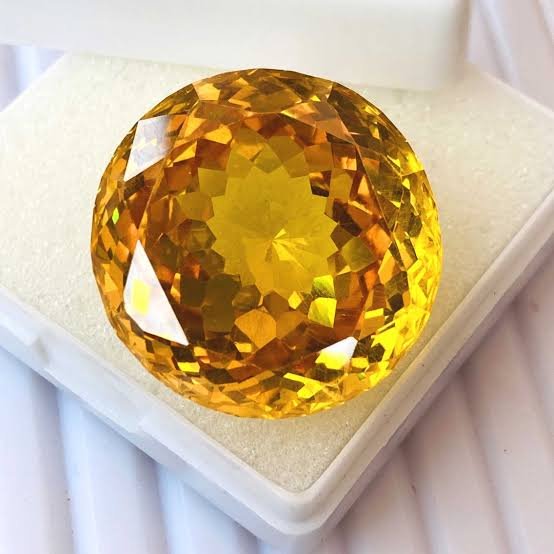
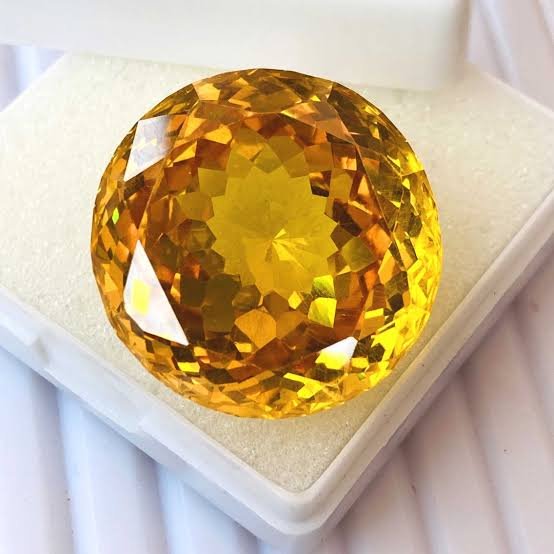
The gemstone shown in the product image has a warm golden-yellow appearance, a large faceted cut and a transparent-looking body. Its faceted surface reflects light in different directions, creating an attractive sparkle and brilliance.
However, a photograph alone cannot reliably confirm the gemstone’s exact carat weight, dimensions, clarity grade, geographical origin, treatment status, natural or synthetic status, or certification. These details should always be verified through the seller, invoice and, preferably, an independent gemological laboratory report.
Yellow Topaz is popular among gemstone and jewelry buyers who appreciate warm yellow colors and want a gemstone with a distinctive, elegant appearance.
2. What Is Yellow Topaz?
Topaz is a naturally occurring mineral with a chemical composition commonly expressed as Al₂(F,OH)₂SiO₄. It belongs to the silicate mineral group and typically has a glass-like or vitreous luster.
One of the most notable physical properties of topaz is its Mohs hardness of 8, giving it good resistance to everyday scratching. However, hardness should not be confused with toughness. Topaz has cleavage, which means a strong impact can potentially damage or split the stone.
Topaz can be transparent to translucent, depending on the material and its internal characteristics.
Yellow Topaz vs Other Yellow Gemstones
Yellow Topaz should not be confused with other yellow gemstones such as:
- Yellow Sapphire
- Citrine
- Yellow Diamond
- Yellow Beryl
Although these gemstones can have similar colors, they are different minerals with different physical and optical properties.
For example, Topaz has a Mohs hardness of 8, while Sapphire has a hardness of 9.
3. Yellow Topaz Appearance & Characteristics
The product image provides a useful visual reference for understanding the gemstone’s overall appearance.
Golden Yellow Color
The stone appears in a warm golden-yellow shade. Yellow Topaz can occur in a range of yellow tones, from pale yellow to stronger golden and yellowish-brown shades.
The exact color description of a particular stone should be verified under suitable lighting because photographs can alter color perception.
Large Faceted Cut
The gemstone shown has a prominent faceted design, with multiple polished surfaces that interact with incoming light.
A well-executed cut can improve a gemstone’s:
- Light return
- Sparkle
- Symmetry
- Visual brightness
- Overall appearance
The exact cutting style, dimensions and proportions cannot be confirmed from the photograph alone.
Brilliance
The visible facets create attractive flashes of reflected light. Brilliance depends on several factors, including cut quality, transparency, polish and the way the stone interacts with light.
Transparency
The gemstone appears transparent or highly translucent in the image, allowing light to travel through the stone.
However, photographic lighting can influence perceived transparency. An image should therefore not be used to assign an official clarity grade.
Clarity
Clarity refers to the presence and visibility of internal inclusions and surface characteristics.
The product photograph may provide an initial visual impression, but an exact clarity assessment should be performed by a qualified gemologist or laboratory.
Shape and Overall Appeal
The stone’s large, symmetrical-looking faceted presentation gives it a strong visual presence. Its golden color makes it suitable for jewelry where the gemstone is intended to be the main visual feature.
4. Yellow Topaz Colors
Yellow Topaz can display several attractive shades, including:
Pale Yellow
A soft and subtle yellow that can create a delicate appearance.
Bright Yellow
A more vivid yellow that can make the gemstone appear lively and energetic.
Golden Yellow
A warmer and richer yellow with a luxurious appearance. This is particularly close to the visual character seen in the provided product image.
Honey Yellow
A deeper warm yellow that may have subtle brownish undertones.
Orange-Yellow
A yellow shade with noticeable orange undertones.
Color intensity can influence a gemstone’s appearance and, depending on the market and overall quality, its desirability. However, color alone does not determine value. Clarity, cut, size, treatment, origin and overall beauty also matter.
5. How Yellow Topaz Is Formed
Natural Topaz develops through geological processes under suitable temperature, pressure and chemical conditions.
It is commonly associated with pegmatites and high-temperature quartz veins, as well as certain igneous-rock environments.
In simple terms, mineral-rich geological fluids can provide the chemical elements needed for Topaz crystals to grow over long periods of geological time.
Important Topaz occurrences are known from several regions around the world, including:
- Brazil
- Pakistan
- Russia
- United States
- Other mineral-rich geological regions
Brazil is particularly well known for important Topaz deposits.
The origin of a specific Yellow Topaz should never be assumed solely from its appearance. If origin is important to the buyer, it should be supported by reliable documentation or a laboratory report.
6. Yellow Topaz Quality Factors
When buying Yellow Topaz, buyers should evaluate more than just its color or size.
| Quality Factor | What Buyers Should Look For |
|---|---|
| Color | Attractive yellow or golden hue, pleasing tone and saturation |
| Clarity | Clean-looking appearance with no distracting inclusions |
| Cut | Good symmetry, proportions, polish and balanced faceting |
| Transparency | Good light transmission and visual clarity |
| Size | Verify both carat weight and actual dimensions |
| Treatment | Confirm whether the stone has been treated and what treatment was used |
| Certification | An independent laboratory report can help verify identity and characteristics |
Color
Look for a color that is attractive and evenly distributed. The preferred shade is ultimately subjective, although certain colors may command greater market interest.
Clarity
A clean-looking gemstone can appear brighter and more attractive. However, natural gemstones can contain inclusions, and their presence does not automatically mean the gemstone is low quality.
Cut
Cut quality has a major influence on brilliance. Poor proportions can cause a gemstone to appear dull or allow excessive light leakage.
Transparency
Higher transparency generally creates a brighter and more appealing appearance, although the ideal characteristics depend on the gemstone and buyer preference.
Size
Larger stones can have greater visual impact, but size should always be considered together with color, clarity and cut.
Treatment
Treatment should always be disclosed. A treated gemstone is not necessarily fake; the important issue is whether the treatment has been properly disclosed.
Certification
For expensive purchases, an independent laboratory report can provide additional confidence regarding gemstone identity and detectable treatments.
7. Natural vs Treated vs Synthetic/Imitation Topaz
Understanding the difference between natural, treated, synthetic and imitation material is essential for gemstone buyers.
Natural Yellow Topaz
Natural Yellow Topaz is topaz that formed through natural geological processes.
If a seller describes a gemstone as “natural,” buyers should ideally request supporting documentation, particularly for expensive stones.
Treated Topaz
Gemstones can undergo treatments designed to alter or improve certain characteristics, such as color.
Treatment does not automatically mean that a gemstone is fake or worthless. The important factor is transparent disclosure.
Buyers should ask:
- Has the stone been treated?
- What type of treatment was used?
- Is the treatment stable?
- Is the treatment disclosed on the invoice or certificate?
Synthetic Topaz
A synthetic gemstone is laboratory-grown rather than naturally formed. Synthetic materials may have chemical, physical or optical characteristics similar to natural gemstones.
Professional gemological testing may be necessary to distinguish certain materials.
Imitation Stones
An imitation is a material that resembles a gemstone but is not actually the same mineral.
For example, a glass material may be made to resemble a yellow gemstone.
Why Certification Matters
For high-value purchases, an independent laboratory report can help establish gemstone identity and disclose detectable treatments.
Important: A product photograph cannot conclusively establish whether a Yellow Topaz is natural, treated, synthetic or an imitation.
8. Yellow Topaz Benefits
Yellow Topaz has been associated with various traditional and spiritual beliefs.
Commonly associated themes include:
- Prosperity
- Confidence
- Positivity
- Abundance
- Success
- Personal growth
Some traditional gemstone practices consider yellow gemstones symbolic of wealth, optimism and achievement.
However, these are traditional or spiritual beliefs, not scientifically proven medical benefits.
Yellow Topaz should not be presented as a treatment for a medical condition or as a scientifically proven method of improving financial success, mental health or physical health.
9. Yellow Topaz in Astrology
In traditional Vedic astrology, Jupiter (Guru/Brihaspati) is strongly associated with yellow gemstones.
Yellow Sapphire, commonly called Pukhraj, is traditionally regarded as the principal gemstone associated with Jupiter.
Some gemstone sellers and practitioners also recommend Yellow Topaz as an alternative yellow gemstone.
However, this recommendation belongs to traditional astrological practice and should not be confused with scientific evidence.
Yellow Topaz and Pukhraj
Yellow Topaz and Yellow Sapphire are completely different minerals.
- Yellow Topaz = Topaz
- Yellow Sapphire = Corundum
Yellow Sapphire has a Mohs hardness of 9, while Topaz has a hardness of 8.
Astrological suitability is based on individual traditions and beliefs. There is no established scientific evidence proving that wearing Yellow Topaz or Yellow Sapphire produces astrological outcomes.
10. Yellow Topaz vs Yellow Sapphire
| Feature | Yellow Topaz | Yellow Sapphire |
|---|---|---|
| Mineral | Topaz | Corundum |
| Hardness | Mohs 8 | Mohs 9 |
| Appearance | Yellow, golden and yellowish-brown shades | Various shades of yellow |
| Typical Value | Often more accessible, depending on quality | Fine natural stones can be significantly more valuable |
| Durability | Good scratch resistance, but impact care is important | Excellent hardness, although impact care is still necessary |
| Availability | Available in various sizes and qualities | Quality natural material can be more limited |
| Common Use | Rings, pendants, earrings and statement jewelry | Rings, pendants, earrings and fine jewelry |
It is important not to judge the value of either gemstone based solely on color. Natural status, treatment, clarity, size, origin, cut and certification can have a major influence on price.
11. Yellow Topaz Jewelry
Yellow Topaz is a versatile gemstone for jewelry because its warm color works well with a variety of metals.
Yellow Topaz Rings
A Yellow Topaz ring can create a bold and elegant centerpiece.
Because Topaz has cleavage and can be vulnerable to strong impact, a protective setting is recommended for rings, particularly for larger stones.
Pendants
Pendants can be an excellent way to showcase a large Yellow Topaz while reducing the amount of direct impact the stone may experience.
Earrings
Yellow Topaz earrings can create a warm, sophisticated appearance and work well for both traditional and contemporary designs.
Bracelets
Yellow Topaz can also be used in bracelets, although extra care is advisable because bracelets may experience more frequent knocks and impacts.
Statement Jewelry
Large faceted Yellow Topaz stones can work particularly well in statement jewelry because their color and size create strong visual impact.
Metal Pairings
Yellow Gold: Creates a warm, luxurious combination.
White Gold or Platinum: Provides contrast that can make the yellow gemstone stand out.
Silver: Creates a clean and contemporary look.
Rose Gold: Produces a warm and coordinated appearance.
12. Yellow Topaz Price & Value
There is no single fixed Yellow Topaz price because gemstone pricing varies significantly from one stone to another.
Important factors include:
- Carat weight
- Color
- Clarity
- Cut
- Transparency
- Origin
- Treatment
- Certification
- Overall appearance
- Market demand
A large stone is not automatically more valuable than a smaller one. A smaller gemstone with excellent color, clarity and cut may be more desirable than a larger stone with inferior characteristics.
Can the Price Be Determined From the Image?
No.
The provided photograph can help describe the gemstone’s visual appearance, but it cannot establish:
- Exact carat weight
- Exact dimensions
- Official clarity grade
- Natural status
- Treatment
- Origin
- Certification
- Fair market value
For current pricing, buyers should compare reputable sellers and consider an independent gemological report for expensive stones.
13. How to Buy Yellow Topaz
A serious buyer should use the following Yellow Topaz buying guide.
1. Ask for a Certificate
For higher-value purchases, request an independent laboratory report where appropriate.
2. Verify Natural or Treated Status
Ask the seller to clearly state whether the gemstone is natural, treated, synthetic or imitation.
3. Verify Carat Weight
The exact carat weight should appear on the invoice or certificate.
4. Check Dimensions
Ask for length, width and depth measurements.
5. Evaluate Color
View the stone under neutral or natural lighting whenever possible.
6. Examine Clarity
Check whether the stone has visible inclusions or surface damage.
7. Inspect Cut Quality
Look for symmetry, balanced faceting, good polish and attractive light return.
8. Check Seller Reputation
Consider:
- Business history
- Customer reviews
- Product transparency
- Gemstone expertise
- Return policy
9. Request an Invoice
The invoice should clearly document the product and purchase price.
10. Understand the Return Policy
A return or inspection period can be especially useful when purchasing a high-value gemstone online.
14. How to Identify Genuine Yellow Topaz
A photograph alone cannot conclusively prove Yellow Topaz authenticity.
Professional gemological identification may involve several tests, including:
- Refractive index testing
- Specific gravity testing
- Microscopic examination
- Inclusion examination
- Optical testing
- Spectroscopic analysis where appropriate
Topaz has characteristic physical and optical properties that can help gemologists identify it.
For example, laboratory reference data commonly place Topaz’s refractive index around 1.619–1.627, with a specific gravity around 3.53.
These tests should be performed by trained professionals rather than attempted through potentially damaging home experiments.
Best Method for Authentication
For a valuable Yellow Topaz stone, the most reliable approach is to obtain an independent laboratory report from a reputable gemological laboratory.
15. Yellow Topaz Care & Cleaning
Although Topaz has a hardness of 8, it still requires careful handling.
Recommended Cleaning
- Use mild soap
- Use lukewarm water
- Clean gently with a soft cloth
- Use a soft brush when necessary
- Dry with a soft cloth
Avoid
- Harsh chemicals
- Abrasive cleaners
- Sudden temperature changes
- High heat
- Strong physical impacts
- Steam cleaning
- Unnecessary ultrasonic cleaning
Because Topaz has cleavage, sudden temperature changes and strong impacts can potentially cause damage.
Storage
Store Yellow Topaz separately from harder gemstones such as diamonds to minimize the possibility of scratches.
A soft jewelry pouch or separate compartment is recommended.
16. Yellow Topaz Durability
Yellow Topaz has a Mohs hardness of 8, which gives it good resistance to everyday scratching.
However, hardness is only one part of gemstone durability.
Topaz’s cleavage means it can be vulnerable to strong impacts. This is particularly important when the stone is used in a ring.
Tips for Everyday Wear
- Choose a protective ring setting.
- Remove the jewelry during heavy physical work.
- Avoid wearing the stone during activities where it may receive strong impacts.
- Store it separately from harder gemstones.
- Inspect the setting periodically.
- Have valuable jewelry professionally checked when necessary.
For lower-impact jewelry such as pendants and earrings, the risk of physical damage may be lower.
17. Yellow Topaz FAQs
1. What is Yellow Topaz?
Yellow Topaz is a yellow-colored variety of the mineral Topaz. It can range from pale yellow to richer golden and yellowish-brown shades.
2. Is Yellow Topaz a natural gemstone?
Natural Topaz forms through geological processes. However, the natural status of an individual stone should be verified through seller documentation or laboratory testing.
3. How can I identify genuine Yellow Topaz?
Professional gemological testing is the most reliable method. Refractive index, specific gravity, microscopy and other diagnostic tests can help identify the gemstone.
4. Is Yellow Topaz valuable?
Yes, Yellow Topaz can have commercial value, but its price depends on color, clarity, cut, size, treatment, origin, certification and overall beauty.
5. What affects Yellow Topaz price?
Major factors include carat weight, color, clarity, cut, transparency, treatment, origin, certification and market demand.
6. Is Yellow Topaz suitable for daily wear?
It can be used in everyday jewelry, but care is important because Topaz has cleavage and can be damaged by strong impact.
7. How should Yellow Topaz be cleaned?
Use mild soap and lukewarm water with a soft cloth or gentle brush. Avoid harsh chemicals, steam and unnecessary ultrasonic cleaning.
8. Can Yellow Topaz be used in rings?
Yes. However, a protective setting is recommended because rings are exposed to more impacts than pendants or earrings.
9. What is the difference between Yellow Topaz and Yellow Sapphire?
They are different minerals. Yellow Topaz is Topaz with a Mohs hardness of 8, while Yellow Sapphire is Corundum with a Mohs hardness of 9.
10. Is Yellow Topaz treated?
Some Topaz materials can be treated. Therefore, buyers should request treatment disclosure rather than assuming that every yellow stone is untreated.
11. Does Yellow Topaz have astrological significance?
Yellow Topaz is associated with certain traditional gemstone and astrological practices, particularly as an alternative yellow gemstone. However, astrological effects are not scientifically proven.
12. Do I need a certificate for Yellow Topaz?
For a lower-value purchase, certification may depend on the seller and buyer. For expensive stones, an independent laboratory report is strongly recommended.
