


SEO Meta Title: Black Tourmaline Stone: Benefits, Uses & Buying Guide
SEO Meta Description: Discover Black Tourmaline Stone, its natural features, traditional benefits, uses, care tips, and how to choose a Raw Black Tourmaline Stone.
Suggested URL Slug: black-tourmaline-stone-benefits-uses
Primary Keyword: Black Tourmaline Stone
Secondary Keywords: Natural Black Tourmaline, Raw Black Tourmaline, Black Tourmaline Benefits, Black Tourmaline Crystal, Black Tourmaline Raw Stone
Introduction: Discover the Natural Beauty of Black Tourmaline Stone
With its deep black colour, distinctive ridged surface, and naturally formed crystal structure, the Black Tourmaline Stone is a popular choice among gemstone collectors, crystal enthusiasts, and people interested in traditional spiritual practices.
Unlike polished gemstones, a Raw Black Tourmaline Stone retains much of its natural appearance, allowing you to appreciate the textures, grooves, and individual characteristics formed during its growth. Each piece can have a different shape, surface pattern, and overall appearance, making raw specimens especially appealing to collectors.
Black Tourmaline is also associated with grounding and protection in various crystal traditions. Whether you are drawn to its mineral properties, decorative appeal, or traditional symbolism, this distinctive black crystal offers an interesting addition to a gemstone collection.
In this guide, we will explore what Black Tourmaline is, its traditional spiritual associations, how to identify natural specimens, practical uses, and essential buying and care tips.
What Is Black Tourmaline?
Black Tourmaline is the common name for the black variety of tourmaline known mineralogically as schorl. Tourmaline is a group of boron-containing silicate minerals, and schorl is one of its most widely recognised varieties.
Natural Appearance and Crystal Structure
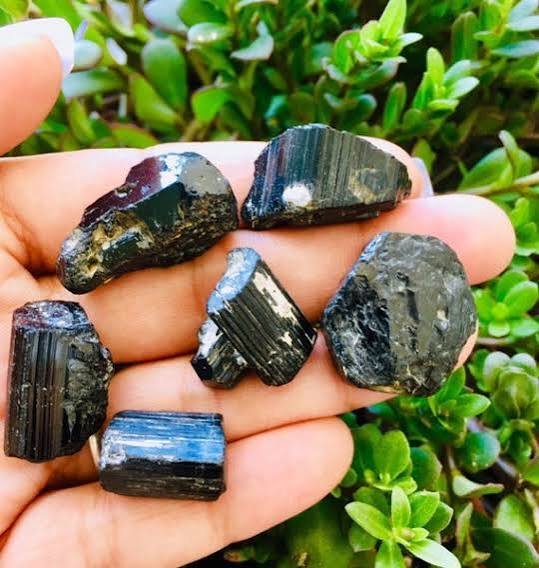
Natural Black Tourmaline typically displays a deep black to brownish-black colour. Its crystals often form elongated, prismatic shapes with prominent longitudinal grooves running along their length.
These natural ridges are among the most recognisable features of Raw Black Tourmaline. Depending on the specimen, the surface may appear deeply grooved, uneven, slightly lustrous, or relatively dull.
Key characteristics include:
- Colour: Usually black or very dark brownish-black.
- Crystal habit: Commonly elongated and prismatic.
- Surface texture: Often marked by parallel grooves or ridges.
- Lustre: Can range from vitreous to relatively dull, depending on the surface.
- Hardness: Approximately 7–7.5 on the Mohs hardness scale.
- Composition: A complex borosilicate mineral containing elements that may include iron, sodium, aluminium, and other constituents.
Natural crystals can develop irregular ends, fractures, and surface variations. These features do not automatically indicate poor quality or artificial treatment.
For collectors, the appeal of a Black Tourmaline Crystal lies in its combination of mineral structure, dark colour, and naturally distinctive texture.
Black Tourmaline Benefits: Traditional Beliefs and Symbolism
Black Tourmaline has a strong place in contemporary crystal traditions and spiritual practices. It is commonly associated with protection, grounding, and symbolic purification.
It is important to distinguish these traditional associations from scientific evidence. The spiritual effects attributed to crystals have not been established as scientifically proven benefits.
1. Traditionally Associated with Protection
In crystal traditions, Black Tourmaline is often described as a protective stone. Some practitioners believe it symbolises a boundary against unwanted influences or negative energy.
For many people, its significance comes from personal belief, ritual, or the meaning they associate with the stone rather than a scientifically demonstrated protective effect.
2. A Symbol of Grounding and Stability
Grounding is another common association of Black Tourmaline. Its dark colour and solid mineral form make it a symbolic reminder of stability, balance, and connection with the present moment.
Some crystal enthusiasts keep the stone nearby during meditation or reflection as a personal reminder to pause and focus.
3. Used in Mindfulness and Spiritual Rituals
A Black Tourmaline Stone may be incorporated into personal meditation routines, intention-setting practices, or spiritual displays.
Holding or observing a natural crystal can provide a focal point for a quiet routine. Any perceived benefit may depend on individual experience and practice, rather than a proven effect unique to the mineral.
A note on responsible crystal use: Black Tourmaline should not be presented as a scientifically verified shield against negative energy, electromagnetic radiation, illness, or other external threats. It is best appreciated for its mineral properties, decorative appeal, and traditional symbolism.
How to Identify Natural Black Tourmaline
If you are looking to buy Natural Black Tourmaline, understanding its characteristic features can help you evaluate a specimen more confidently.
1. Examine the Longitudinal Grooves
One of the most recognisable features of Black Tourmaline is its lengthwise ridged surface. Natural prismatic crystals frequently show parallel grooves extending along the crystal.
However, not every specimen displays equally prominent ridges, particularly if it has been broken, cut, or otherwise modified.
2. Observe the Colour and Surface
Black Tourmaline commonly appears black or very dark brownish-black. Look closely at its surface, including the crystal ends, edges, and any visible fractures.
Natural specimens may have uneven surfaces, minor imperfections, and variations in lustre. These characteristics alone cannot prove that a stone is natural.
3. Look at the Overall Crystal Shape
Many Raw Black Tourmaline pieces have elongated, ridged forms, although broken fragments and irregular specimens are also common.
Compare the specimen’s overall appearance with reliable mineral references, while remembering that natural crystals vary considerably.
4. Ask the Seller About Authenticity
Before purchasing, check whether the seller clearly describes the material as natural, treated, polished, or otherwise modified.
Ask for actual product photographs, accurate size and weight information, and details of any available mineral identification or laboratory documentation.
Important: Visual inspection alone cannot conclusively establish a stone’s identity or authenticity. Glass, other dark minerals, and manufactured imitations can resemble Black Tourmaline. For higher-value purchases or situations requiring certainty, seek assessment from a qualified gemmologist or an appropriate gem-testing laboratory.
Popular Uses of Black Tourmaline Stone
The versatility of Black Tourmaline makes it suitable for several decorative, collecting, and personal uses.
1. Gemstone and Mineral Collections
A natural Black Tourmaline Raw Stone is an interesting specimen for mineral collectors who appreciate crystal habit, surface texture, and naturally occurring variations.
It can also complement collections featuring quartz, feldspar, and other mineral specimens.
2. Home Décor and Crystal Displays
Display a Black Tourmaline Crystal on a shelf, desk, side table, or dedicated mineral stand. Its dark colour can create an attractive contrast with lighter stones, wood, glass, or neutral interiors.
Use a stable display surface and avoid placing the specimen where it could fall or be easily knocked over.
3. Meditation and Mindfulness
People who follow crystal-based spiritual practices may include Black Tourmaline in a meditation space or personal altar.
It can serve as a symbolic object for grounding, reflection, and intention-setting without requiring any claim of scientifically proven spiritual effects.
4. Thoughtful Gifts
A Black Tourmaline Stone can make a thoughtful gift for mineral collectors, crystal enthusiasts, or anyone who appreciates natural objects.
Its distinctive appearance makes it suitable for birthdays, festive occasions, housewarming gifts, and additions to a personal crystal collection.
How to Clean and Care for Black Tourmaline
Proper care helps preserve the appearance of your Black Tourmaline specimen.
- Dust gently: Use a soft, dry brush or lint-free cloth to remove loose dust from grooves and ridges.
- Clean cautiously: If the specimen’s condition and any associated materials are suitable, use a slightly damp cloth. Avoid soaking it unnecessarily.
- Avoid harsh chemicals: Do not use strong acids, abrasive cleaners, or unverified cleaning solutions.
- Prevent accidental damage: Although Black Tourmaline is relatively hard, it can fracture or chip under impact. Handle it carefully.
- Store separately: Keep it in a padded box or compartment to reduce scratching and accidental contact with other specimens.
- Keep it stable: Use a suitable display stand when necessary, particularly for elongated or irregular pieces.
Some crystal traditions recommend sunlight, moonlight, smoke, or other rituals for spiritual cleansing. These are matters of personal practice, not scientifically established methods for removing energy from a mineral. Avoid heat, prolonged exposure to harsh conditions, or any process that could damage the specimen.
How to Choose the Right Black Tourmaline Raw Stone
Choosing a suitable stone depends on your intended use, personal preferences, and budget.
Consider Size and Weight
Check the actual dimensions and weight before ordering. A small specimen may suit a collection box or compact display, while a larger piece may be more suitable for a shelf or mineral stand.
Do not rely on photographs alone to judge scale.
Evaluate Shape and Surface Texture
If you appreciate prominent natural ridges, look for clear photographs showing the specimen from multiple angles. If you prefer unusual mineral formations, an irregular or broken crystal may appeal to you more than a long, well-defined prism.
There is no single shape that is best for every collector.
Understand Natural Variations
Natural stones can vary in colour, crystal termination, surface texture, size, and visible imperfections. These differences are part of the natural specimen’s individual character.
A rough appearance does not automatically establish authenticity, and a smooth surface does not necessarily mean that a stone is artificial.
Check Seller Transparency
A reliable product listing should clearly state:
- Whether the specimen is represented as natural Black Tourmaline.
- Its approximate or measured size and weight.
- Whether it is raw, polished, cut, or treated, as applicable.
- Whether the displayed images show the actual specimen or representative pieces.
- Whether any laboratory documentation or identification details are available.
Natural and treated are not mutually exclusive categories: a natural mineral may also have undergone treatment. Ask about both its material identity and any processing.
Why Choose Our Black Tourmaline Raw Stones?
Our Natural Black Tourmaline Raw Stone collection is intended for customers who appreciate the natural appearance and distinctive structure of raw mineral specimens.
Each piece may display its own combination of deep colour, longitudinal grooves, irregular edges, and natural surface variations.
Whether you are expanding a gemstone collection, creating a mineral display, exploring crystal traditions, or selecting a thoughtful gift, a raw Black Tourmaline specimen offers an opportunity to appreciate the character of a naturally formed mineral.
When choosing your stone, review the available product photographs and listing details carefully. Check the stated size, weight, and specimen-selection information so you can select a piece that suits your preferences.
Explore our Black Tourmaline Raw Stones and find a specimen that complements your collection or display.
Frequently Asked Questions About Black Tourmaline Stone
1. What is Black Tourmaline Stone used for?
Black Tourmaline is commonly collected as a mineral specimen and used in home décor, crystal displays, meditation spaces, and personal spiritual practices. Its traditional associations include grounding and protection, although these spiritual effects have not been scientifically established.
2. How can I identify natural Black Tourmaline?
Look for its characteristic black colour, elongated crystal habit, and longitudinal grooves. However, these features are not conclusive proof of authenticity. Reliable seller information and professional mineral identification can provide greater confidence.
3. How do I clean a Black Tourmaline Raw Stone?
Start with a soft, dry brush or cloth. If additional cleaning is appropriate for the specimen, use a slightly damp cloth and dry it carefully. Avoid harsh chemicals, unnecessary soaking, and sudden temperature changes.
4. Can I keep Black Tourmaline at home?
Yes. Black Tourmaline can be displayed at home as a decorative mineral specimen. Choose a stable location where the stone will not fall or be accidentally damaged.
5. Is Black Tourmaline suitable as a gift?
Yes. It can be a thoughtful gift for gemstone collectors, mineral enthusiasts, and people interested in crystal traditions. Consider the recipient’s preferences and choose an appropriate size and presentation.
6. Is Raw Black Tourmaline better than polished Black Tourmaline?
Neither is universally better. Raw specimens preserve a more natural-looking crystal surface, while polished pieces offer a smoother finish. The right choice depends on your collection, décor, and personal taste.
7. Does Black Tourmaline protect against negative energy?
In some spiritual traditions, Black Tourmaline symbolises protection from negative energy. This is a traditional belief, not a scientifically proven property. Its documented mineral characteristics are separate from such spiritual interpretations.
8. Can Black Tourmaline scratch or break?
Black Tourmaline has a Mohs hardness of approximately 7–7.5, but hardness does not mean that it is unbreakable. Strong impacts can chip or fracture a specimen, so careful handling and separate storage are recommended.
Conclusion: Explore the Natural Beauty of Black Tourmaline
The Black Tourmaline Stone combines a distinctive dark appearance with a fascinating mineral structure and a rich history of traditional spiritual associations. Its characteristic ridges, natural variations, and versatility make it an appealing choice for collectors, crystal enthusiasts, and people looking for an eye-catching mineral display.
Whether you prefer a raw specimen for its natural texture or want to add a meaningful decorative object to your space, understanding its properties and choosing a transparent, well-described listing can help you make a more informed purchase.
Explore our Natural Black Tourmaline Raw Stones today and discover a specimen that suits your collection, décor, or gifting needs.
