

Discover the captivating beauty of Rainbow Moonstone, from its luminous flashes and symbolic meaning to its gemstone properties, jewelry uses, care, and buying tips.
SEO Metadata
- SEO Title: Rainbow Moonstone: Meaning, Properties & Buying Guide
- Meta Description: Explore Rainbow Moonstone meaning, properties, benefits, jewelry uses, prices, and care tips. Learn how to choose and identify this luminous gemstone.
- Suggested URL Slug:
/rainbow-moonstone-meaning-properties-buying-guide/ - Primary Keyword: Rainbow Moonstone
- Secondary Keywords: Rainbow Moonstone gemstone, natural Rainbow Moonstone, Rainbow Moonstone benefits, Rainbow Moonstone meaning, Rainbow Moonstone price, Rainbow Moonstone jewelry, genuine Rainbow Moonstone, loose Rainbow Moonstone gemstone
Introduction to Rainbow Moonstone
Rainbow Moonstone is admired for its luminous appearance, delicate body colors, and enchanting flashes of blue and other spectral colors. Its distinctive optical effects give the gemstone an almost moonlit quality, making it a popular choice among jewelry lovers, gemstone collectors, and people who appreciate the beauty of natural minerals.
Unlike gemstones valued primarily for their intense body color, Rainbow Moonstone attracts attention through the way light interacts with its internal structure. A stone that appears milky white or nearly transparent from one angle may reveal a striking blue glow when tilted under suitable lighting.
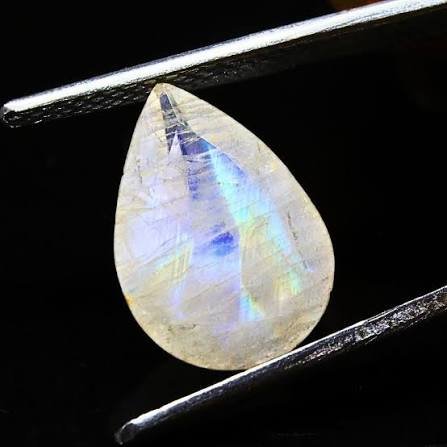
The Rainbow Moonstone gemstone featured in our product image has a polished, pear-shaped silhouette with attractive blue and rainbow-like flashes against a light-colored body. Its elongated shape creates a graceful appearance that could suit pendants, statement rings, or bespoke jewelry designs. These observations describe the image only; the stone’s mineral identity, authenticity, origin, treatment status, weight, and quality have not been independently verified.
Whether you are exploring Rainbow Moonstone for its visual appeal, symbolic meaning, or jewelry-making potential, understanding its properties can help you make a more informed purchase.
What Is Rainbow Moonstone?
Rainbow Moonstone is a trade name commonly used for a light-colored feldspar gemstone that displays blue or multicolored optical effects. In the gem trade, the name often refers to material that is mineralogically related to labradorite rather than the orthoclase feldspar traditionally associated with classic moonstone.
This distinction matters because gemstones sold under similar names may have different mineral compositions and optical properties.
Rainbow Moonstone is especially popular for:
- Its blue, white, and rainbow-like flashes.
- Its soft, luminous appearance.
- Its suitability for distinctive jewelry designs.
- Its associations with moonlight, intuition, and new beginnings in crystal traditions.
- Its appeal as a loose gemstone for custom jewelry projects.
When purchasing a stone described as Rainbow Moonstone, it is wise to check the seller’s mineral identification and product disclosures rather than relying on the trade name alone.
Physical Appearance and Unique Features
Blue and Rainbow-Like Flashes
The most recognizable feature of Rainbow Moonstone is its shifting play of light. Depending on the material and viewing angle, flashes may appear blue, white, or multicolored. These effects can make the gemstone look different as it moves in natural or artificial light.
The intensity and distribution of the flashes depend on the gemstone’s internal structure, orientation, cut, and lighting conditions. Some stones display a concentrated blue glow, while others reveal broader patches of color across the surface.
In the pictured gemstone, the pale body color and blue, rainbow-like flashes create a contrast that draws attention to its polished surface.
Adularescence vs. Labradorescence
Two optical terms are important when discussing moonstone varieties.
Adularescence is the soft, floating glow traditionally associated with moonstone. It results from light scattering within microscopic structural layers in the feldspar. Classic moonstone typically belongs to the orthoclase–albite feldspar series.
Labradorescence is the more appropriate term for the characteristic broad flashes of color commonly seen in labradorite and much of the material marketed as Rainbow Moonstone. It arises from light interference associated with internal structures, including fine lamellae within the feldspar.
Although both effects create attractive displays of light, they are not technically interchangeable. The correct term for a particular stone depends on its verified mineral identity and optical behavior.
Pear-Shaped Cut and Polished Finish
The pictured stone has a pear-shaped outline, combining a rounded end with a tapered point. This cut creates an elegant, flowing silhouette and can direct attention toward the gemstone’s flashes as the stone is tilted.
A polished finish gives the surface a smooth, reflective appearance. The overall effect is well suited to jewelry designs that emphasize the gemstone itself rather than elaborate surrounding details.
Transparency, Body Color, and Luster
Rainbow Moonstone commonly ranges from translucent to more transparent material, although some specimens may appear cloudy or milky. Body colors can include white, colorless, and pale gray tones.
Its polished surface generally has a vitreous, or glass-like, luster. The visual appeal comes from the combination of the base color and the optical effect rather than from surface shine alone.
The photograph suggests a light-colored stone with visible flashes, but determining its transparency, polish quality, internal inclusions, and surface condition in detail would require closer inspection.
Mineral Composition and Gemstone Properties
Rainbow Moonstone is associated with the feldspar mineral group, a major group of rock-forming minerals. Material sold under this trade name is commonly labradorite or closely related feldspar, but a product name or photograph cannot confirm the identity of an individual specimen.
Feldspars contain varying proportions of elements such as silicon, aluminum, sodium, potassium, and calcium. The exact composition depends on the mineral species.
Hardness and Durability
Labradorite, commonly marketed as Rainbow Moonstone, has a Mohs hardness of approximately 6 to 6.5. Traditional moonstone generally falls around 6 to 6.5 as well.
The Mohs scale measures resistance to scratching, not resistance to breaking. Although these gemstones are suitable for many jewelry applications, they can be scratched by harder materials and may chip or fracture if struck.
Feldspars also have cleavage, meaning they can split along particular crystallographic planes. This makes careful cutting, setting, wearing, and storage important.
Distinguishing Rainbow Moonstone, Moonstone, and Labradorite
| Feature | Rainbow Moonstone | Traditional Moonstone | Labradorite |
|---|---|---|---|
| Common mineral association | Often labradorite | Orthoclase–albite feldspar | Labradorite feldspar |
| Typical optical effect | Blue or multicolored flashes | Soft, floating glow | Broad flashes of blue, green, gold, or other colors |
| Common appearance | Light-colored body with colorful flashes | Milky or translucent body with a luminous sheen | Often gray or darker body with visible color flashes |
| Main distinction | A trade name that can overlap with labradorite | Known for adularescence | Mineral name associated with labradorescence |
These descriptions are general, and individual specimens can vary. The appearance alone is not sufficient to establish mineral identity.
Specific gravity, refractive index, and crystal system should be reported for a particular product only when the mineral identity is sufficiently established and the values are supported by reliable gemological information.
Rainbow Moonstone Meaning and Symbolism
Rainbow Moonstone has a long-standing place in contemporary crystal traditions and gemstone symbolism. Its changing flashes and moonlike appearance have inspired associations with inner awareness, emotional balance, and personal transformation.
Moonlight and Intuition
The gemstone’s luminous appearance is often linked symbolically with moonlight, reflection, and intuition. Some people choose it as a reminder to pause, listen to their inner thoughts, and approach decisions with greater awareness.
Balance and Emotional Harmony
In crystal traditions, Rainbow Moonstone is frequently associated with calmness, balance, and emotional harmony. Its gentle colors and shifting flashes can also serve as a personal symbol of patience and self-reflection.
New Beginnings and Personal Growth
Rainbow Moonstone is sometimes selected to mark transitions, new opportunities, or important milestones. It may be given as a birthday, anniversary, graduation, or personal achievement gift.
These meanings are cultural and spiritual interpretations rather than scientifically established properties. Their significance varies according to individual beliefs and traditions.
Rainbow Moonstone Benefits
The benefits commonly attributed to Rainbow Moonstone are primarily spiritual, emotional, and symbolic.
Commonly Attributed Benefits
- Mindfulness: Some crystal enthusiasts use the stone as a visual reminder to slow down and remain present.
- Personal reflection: Its association with intuition may encourage journaling, contemplation, or thoughtful decision-making.
- Symbolic emotional balance: It is often chosen to represent calmness, acceptance, and a balanced approach to life’s changes.
- Meditation: Its luminous appearance may serve as a focal point during quiet reflection or personal rituals.
- Meaningful gifting: The gemstone can represent hope, renewal, and encouragement when given to someone beginning a new chapter.
There is no reliable scientific evidence that Rainbow Moonstone independently produces specific psychological or physical health outcomes. It should not be presented as a treatment for medical conditions, a fertility aid, or a substitute for professional healthcare.
Its value in mindfulness or personal rituals can instead be understood through the meaning an individual chooses to associate with it.
Rainbow Moonstone Jewelry and Uses
Rainbow Moonstone jewelry combines a relatively understated body color with distinctive flashes of light. This makes the gemstone suitable for designs ranging from delicate everyday accessories to expressive statement pieces.
Rings
Rainbow Moonstone rings can feature a smooth cabochon or a carefully faceted design where appropriate. Protective settings, such as bezels, can help shield the gemstone’s edges from accidental impacts.
Because feldspar has cleavage and moderate hardness, rings intended for frequent wear deserve particular attention to setting protection and maintenance.
Pendants and Necklaces
Pendants are an especially appealing option because the gemstone can move naturally and catch the light. The pear-shaped stone shown in the image could work well in a vertical pendant setting that follows its elongated outline.
A simple bezel or a design with discreet prongs can highlight the gemstone without overwhelming its natural appearance.
Earrings
Rainbow Moonstone can be used in studs, drops, and dangle earrings. Earrings generally experience less impact than rings, although secure settings and careful storage remain important.
Bracelets
Beads, cabochons, and decorative gemstone elements can add a luminous accent to bracelets. For designs likely to encounter repeated knocks, protected settings and thoughtful placement can help reduce damage.
Suitable Metal Pairings
- Sterling silver: Complements the cool blue and white flashes.
- White gold: Creates a refined, understated appearance.
- Yellow gold: Provides a warm contrast with the gemstone’s pale body color.
- Rose gold: Offers a softer, romantic color combination.
The best pairing depends on the design, the wearer’s preferences, and the gemstone’s actual appearance in person.
Why Choose a Loose Rainbow Moonstone Gemstone?
A loose Rainbow Moonstone gemstone gives buyers and jewelry designers greater control over the finished piece. The stone can be evaluated before setting, and its shape can guide decisions about the mounting, metal, and overall design.
The pear-shaped example may be particularly appealing for custom pendants, distinctive rings, or other designs that benefit from an elongated gemstone.
Before commissioning jewelry, confirm the stone’s measurements, weight, condition, and compatibility with the intended setting.
How to Choose a Quality Rainbow Moonstone
A quality assessment should consider the gemstone as a whole rather than relying on one attractive flash.
1. Evaluate the Optical Effects
Look at the gemstone from several angles under diffuse daylight or neutral lighting. Consider whether the blue or multicolored flashes are easy to see, how broadly they appear, and whether they remain attractive as the stone moves.
The ideal appearance is subjective. Some buyers prefer a concentrated electric-blue flash, while others favor broader rainbow-like colors.
2. Examine Clarity
Check for visible cracks, distracting inclusions, cloudy areas, and surface-reaching fractures. Some internal features are natural and may not significantly detract from a stone’s beauty, but substantial fractures can affect durability.
Do not confuse internal clarity with the strength of the optical effect; they are separate characteristics.
3. Assess Cut and Shape
A well-executed cut should suit the gemstone’s internal structure and display its optical effect effectively. For a pear-shaped stone, examine the symmetry, outline, tip, and balance between the rounded end and tapered point.
The cut should also be appropriate for the intended jewelry setting.
4. Inspect the Polish and Surface
Look for a smooth finish without obvious scratches, chips, or unevenly polished areas. Examine the tip and edges carefully because these areas can be vulnerable to damage.
5. Check Identification and Disclosure
Before buying, ask the seller to disclose, where known and applicable:
- The mineral identification and basis for the trade name.
- Whether any treatments have been performed or are suspected.
- Measurements and carat weight.
- Visible inclusions or damage.
- The stated origin, if it has been reliably established.
- Whether a gemological report is available.
A photograph cannot establish an official quality grade. The pictured stone should not be assigned a grade without appropriate measurements, examination, and clearly defined grading criteria.
Rainbow Moonstone Price and Value
The Rainbow Moonstone price varies according to the characteristics of the individual stone and the market in which it is sold. Two stones of similar size may have different prices because of differences in optical effects, cutting, condition, or seller documentation.
Important price factors include:
- Size and weight: Larger stones may cost more, although price does not necessarily increase in direct proportion to carat weight.
- Optical quality: Strong, attractive, well-distributed flashes may increase desirability.
- Cut and polish: Good proportions, symmetry, and finishing can improve appearance and usability.
- Clarity and condition: Visible fractures, chips, and distracting inclusions may affect value.
- Material identification: A clearly documented gemstone identity helps buyers compare like with like.
- Origin: A reliably documented origin may be relevant in some markets, but origin should not be assumed from appearance.
- Treatment and disclosure: Known treatments can influence how a gemstone is evaluated and priced.
- Market demand: Design trends, availability, and seller positioning can also affect prices.
Because no verified measurements, weight, grading information, or market comparison has been supplied for the pictured product, a specific price or value estimate would be speculative.
For higher-value purchases or situations where identification is especially important, consider an independent gemological assessment. A laboratory report may help establish the gemstone’s identity and document relevant observations, although the scope of testing and the information reported vary by laboratory.
How to Identify Genuine Rainbow Moonstone
Identifying genuine Rainbow Moonstone requires more than checking whether a stone displays blue or rainbow-colored flashes. Similar optical effects can occur in other feldspars, and certain simulants can imitate the gemstone’s appearance.
Common Signs to Examine
- Optical effects: Observe how the flashes change with the viewing angle. This can provide useful clues but does not prove authenticity.
- Surface and internal features: Examine the stone for bubbles, scratches, fractures, and other characteristics. None of these features alone is a definitive identification test.
- Material consistency: Compare the gemstone’s appearance and physical characteristics with reliable information about the claimed mineral species.
- Seller documentation: Check whether the seller identifies the stone as labradorite, traditional moonstone, or another material sold under the Rainbow Moonstone trade name.
Common Imitations and Misleading Descriptions
Glass, synthetic materials, and other gemstones may be used to imitate the appearance of moonstone varieties. Some products may also be described using broad trade names without clearly identifying the underlying mineral.
A gemstone’s natural appearance does not automatically prove that it is untreated, and a seller’s use of the word natural should not replace appropriate disclosure.
If authenticity is important for your purchase, consult a qualified gemologist or independent gemological laboratory. Professional testing can help distinguish mineral species and identify certain simulants or treatments, depending on the methods used.
Rainbow Moonstone Care and Cleaning
Rainbow Moonstone requires gentle handling because its moderate hardness and cleavage make it vulnerable to scratches, chips, and fractures.
Step-by-Step Cleaning Guide
- Prepare lukewarm water with a small amount of mild, gentle soap.
- Use a soft cloth or a very soft brush to remove dirt without applying excessive pressure.
- Rinse gently with clean water, taking care not to lose the gemstone down a drain.
- Pat dry with a soft, lint-free cloth.
- Inspect the setting, if the stone is mounted, for looseness or damage before wearing it again.
For loose gemstones, a soft, padded work surface and a secure cleaning container can help prevent accidental drops.
What to Avoid
- Harsh chemicals, strong cleaning solutions, and abrasive materials.
- Sudden temperature changes.
- Knocks against hard surfaces or other jewelry.
- Ultrasonic and steam cleaners, which should generally be avoided unless a qualified professional confirms that the specific stone and setting can safely tolerate the method.
- Careless storage alongside harder gemstones, which may scratch the surface.
Store Rainbow Moonstone separately in a soft pouch or lined jewelry box. For rings and bracelets, consider removing the jewelry before heavy work, sports, or activities that could expose it to repeated impacts.
With proper care, a Rainbow Moonstone gemstone can retain its attractive appearance for years.
Who May Appreciate Rainbow Moonstone?
Rainbow Moonstone appeals to different buyers for different reasons.
- Jewelry lovers: Those who enjoy luminous gemstones and unusual optical effects.
- Gemstone collectors: Those interested in feldspar varieties and stones with distinctive appearances.
- Custom jewelry designers: Those looking for a light-colored gemstone for a personalized setting.
- Gift buyers: Those seeking a gemstone associated with renewal, intuition, or meaningful life transitions.
- Crystal enthusiasts: Those who appreciate the symbolic associations used in meditation and personal reflection.
Rainbow Moonstone is also associated with certain zodiac signs and birthstone traditions in contemporary jewelry and crystal culture. These associations vary between sources and should not be treated as universal or scientifically established classifications.
When choosing a gemstone as a gift, consider the recipient’s preferred colors, jewelry style, and intended use rather than relying on symbolic associations alone.
Why Choose Our Rainbow Moonstone?
The Rainbow Moonstone featured in our product image stands out for its graceful pear-shaped outline, polished finish, and attractive blue and rainbow-like flashes.
Its light-colored appearance provides a versatile starting point for jewelry designs that emphasize subtle color, luminous effects, and elegant proportions.
What Makes This Design Appealing?
- Distinctive pear shape: An elongated silhouette that can complement pendants, earrings, and selected ring designs.
- Eye-catching flashes: Blue and rainbow-like colors add visual interest as the gemstone catches the light.
- Polished appearance: A smooth-looking finish highlights the stone’s form and visible optical effects.
- Versatile styling: Its pale appearance can complement silver, white gold, yellow gold, and rose gold designs.
- Loose-stone potential: The shape may appeal to buyers looking for a gemstone to incorporate into a carefully planned jewelry piece.
Choosing a loose Rainbow Moonstone gemstone allows you to focus on the stone’s visible characteristics before deciding how it might be used in jewelry.
We encourage buyers to review the product’s confirmed measurements, weight, gemstone identification, treatment disclosures, and other available specifications before purchasing. These details should be confirmed with the seller rather than inferred from the photograph.
If you are drawn to gemstones with a luminous appearance and distinctive flashes of color, explore our Rainbow Moonstone product and inquire about any product-specific information you need to make a confident decision.
Frequently Asked Questions About Rainbow Moonstone
1. What is Rainbow Moonstone?
Rainbow Moonstone is a gemstone trade name commonly applied to light-colored feldspar displaying blue or multicolored optical effects. Much of the material sold under this name is labradorite or closely related feldspar, rather than the orthoclase-based material traditionally called moonstone.
2. Is Rainbow Moonstone a real gemstone?
Yes, Rainbow Moonstone is an established gemstone trade name for genuine feldspar materials. However, the name alone does not establish the identity or authenticity of a particular product. Buyers should check the seller’s disclosures and seek independent testing when necessary.
3. What causes Rainbow Moonstone’s rainbow flashes?
The flashes result from light interacting with internal structures in the feldspar. For material identified as labradorite, the characteristic effect is called labradorescence. Its appearance depends on the stone’s internal structure, orientation, cut, and lighting.
4. Is Rainbow Moonstone the same as traditional Moonstone?
Not necessarily. Traditional moonstone is associated with orthoclase–albite feldspar and adularescence, while Rainbow Moonstone commonly refers to labradorite displaying colorful flashes. The two can look similar but are mineralogically distinguishable.
5. Is Rainbow Moonstone suitable for everyday jewelry?
It can be used in everyday jewelry, but care is important. With a Mohs hardness of approximately 6 to 6.5 and distinct cleavage, it is more vulnerable to scratching, chipping, and impact damage than harder gemstones. Protective settings and careful wear are advisable, especially for rings.
6. How should I clean Rainbow Moonstone?
Clean it gently with lukewarm water, mild soap, and a soft cloth or brush when appropriate. Rinse carefully and dry with a lint-free cloth. Avoid abrasive cleaners, harsh chemicals, sudden temperature changes, and generally avoid ultrasonic or steam cleaning.
7. How can I check whether Rainbow Moonstone is genuine?
Start by reviewing the seller’s gemstone identification, treatment disclosures, and available documentation. Visual inspection can reveal useful characteristics, but blue flashes alone do not prove authenticity. Professional gemological testing is the more reliable option when identification matters.
8. What factors affect Rainbow Moonstone price?
Price depends on size, carat weight, the strength and distribution of optical effects, clarity, cut, polish, condition, material identification, verified origin where relevant, treatment disclosures, and market demand. Prices should be compared between stones with similar characteristics.
9. Can Rainbow Moonstone be used in custom jewelry?
Yes. Loose Rainbow Moonstone can be incorporated into pendants, earrings, rings, and other designs. The pear-shaped stone shown in the product image could suit a vertical pendant or another design that complements its outline. Confirm its measurements and condition before planning a setting.
10. What should I check before buying Rainbow Moonstone?
Review the mineral identification, color flashes, clarity, cut, polish, surface condition, measurements, carat weight, and treatment disclosures. Ask about origin only if it is documented, and request a gemological report if the level of assurance you need warrants one.
11. Does Rainbow Moonstone have spiritual benefits?
In crystal traditions, Rainbow Moonstone is associated with intuition, balance, mindfulness, and new beginnings. Some people use it as a symbolic focus for meditation or reflection. These associations are matters of belief rather than scientifically demonstrated effects.
12. Is Rainbow Moonstone a birthstone?
Rainbow Moonstone is sometimes promoted as a birthstone alternative or associated with particular zodiac signs in contemporary gemstone traditions. Such associations vary between sources and are not universal classifications. Check the specific tradition if you are selecting a stone for a birthstone gift.
13. Does Rainbow Moonstone need special storage?
It benefits from separate storage in a soft pouch or lined compartment. Keep it away from harder gemstones and objects that could scratch it, and avoid storing it where it may be knocked against other jewelry.
14. Does a Rainbow Moonstone gemstone certificate guarantee quality?
A gemological report can provide useful information about a gemstone’s identity and other characteristics within the laboratory’s testing scope. However, reports vary, and a certificate does not automatically guarantee superior quality, market value, or a particular treatment status unless those matters are specifically assessed and documented.
Conclusion: Explore the Beauty of Rainbow Moonstone
Rainbow Moonstone brings together the appeal of feldspar gemstones, luminous optical effects, and a rich tradition of symbolic meaning. Its blue and rainbow-like flashes, pale body color, and versatility make it an attractive option for pendants, earrings, rings, and custom jewelry.
Understanding its mineral identity, moderate hardness, cleavage, price factors, and care requirements helps buyers appreciate the gemstone while setting realistic expectations. Equally important is choosing a trustworthy seller who provides clear information about identification, treatments, measurements, and other product-specific details.
The pear-shaped Rainbow Moonstone featured in our product image offers an appealing combination of graceful form and colorful flashes. If its distinctive appearance matches your style, explore our Rainbow Moonstone product and contact us to inquire about its specifications before purchasing.
Choose with confidence by letting the gemstone’s visible beauty inspire you while allowing accurate product information to guide your final decision.
SEO Publishing Checklist
Suggested Internal Links
Add contextual links to relevant pages on your website where those products or articles exist:
- Moonstone Gemstones: Compare traditional moonstone with Rainbow Moonstone.
- Labradorite Gemstones: Explore another feldspar gemstone known for colorful optical effects.
- Blue Flash Moonstone: Discover gemstones featuring prominent blue flashes, if available in your catalog.
- Loose Gemstones Collection: Browse gemstones suitable for jewelry design.
- Gemstone Care Guide: Learn how to clean, store, and protect delicate gemstones.
- Gemstone Buying Guide: Understand gemstone identification, treatments, certificates, and value.
- Custom Gemstone Jewelry: Explore available jewelry design services, if offered.
Use descriptive anchor text that reflects the destination page and avoids forcing the primary keyword into every link.
Suggested Product Image Alt Text
Use only descriptions that accurately match each actual image. Avoid adding unsupported claims about authenticity, origin, or quality.
Pear-shaped Rainbow Moonstone gemstone with blue and rainbow-like flashesPolished loose Rainbow Moonstone showing a pale body color and blue flashRainbow Moonstone gemstone displaying colorful optical effects under lightClose-up of a pear-shaped gemstone with a smooth polished surfaceLoose Rainbow Moonstone gemstone for potential custom jewelry designsBlue-flash feldspar gemstone photographed from the frontPear-shaped gemstone showing its outline and visible surface features
If you have additional photographs, use different alt text for distinct views rather than repeating identical wording.
Product Details to Confirm Before Publication
Before publishing this article alongside the product listing, verify the following where applicable:
- Gemstone identity: Confirm whether the material is labradorite or another feldspar variety.
- Natural or synthetic status: State only what is supported by reliable identification.
- Treatment status: Disclose known treatments and avoid unsupported untreated claims.
- Measurements and carat weight: Obtain the actual product specifications.
- Condition and quality: Inspect the stone rather than assigning a grade from the photograph.
- Origin: Include a geographic origin only if it is reliably documented.
- Certification: Mention a certificate or laboratory report only if one exists and its details have been verified.
- Product-specific claims: Confirm any customization options, availability, warranties, or guarantees before mentioning them.
These checks help keep the blog informative, persuasive, and aligned with trustworthy gemstone retail practices.
