


Aquamarine Stone: Complete Guide to Its Properties
Aquamarine is admired for its delicate blue hues, ocean-inspired beauty, and timeless appeal in gemstone jewellery. From finely cut gemstones to loose Aquamarine Gemstone Chips, this distinctive material offers creative possibilities for jewellery designers, gemstone collectors, retailers, and wholesale buyers.
Yet, choosing the right aquamarine involves more than appreciating its colour. Understanding its mineral composition, physical properties, quality factors, treatment status, and intended applications helps buyers make informed decisions and select material that meets their requirements.
In this comprehensive guide, we explore the world of aquamarine stone, including its history, properties, traditional significance, practical uses, pricing considerations, care, and essential buying tips. We also explain how to evaluate loose gemstone chips and what to look for when sourcing them for personal projects or commercial use.
1. Introduction to Aquamarine Stone
What Is Aquamarine?
Aquamarine is a blue to greenish-blue variety of beryl, a mineral found in a range of colours. Its characteristic colour is primarily associated with trace amounts of iron within its crystal structure.
The name aquamarine comes from the Latin expression aqua marina, meaning “water of the sea.” The name captures the gemstone’s resemblance to clear seawater and reflects its long-standing association with the ocean.
Aquamarine belongs to the same mineral family as emerald, morganite, and heliodor. Although these gemstones share the same fundamental mineral composition, differences in trace elements and other factors contribute to their distinct colours and appearances.
History and Cultural Significance
Aquamarine has been valued for centuries and is associated with maritime traditions, elegance, and tranquillity. Historical accounts connect the gemstone with sailors and the belief that it offered protection during sea voyages.
Today, aquamarine remains popular in fine jewellery and gemstone collections. Its understated blue colour appeals to people who prefer a refined alternative to more intensely coloured gemstones.
Aquamarine is also traditionally associated with calmness, clear communication, and emotional balance. These meanings contribute to its appeal among collectors and individuals who appreciate gemstones for both their appearance and symbolism.
What Makes Aquamarine Unique?
Aquamarine combines an attractive colour range with a relatively high degree of hardness and a versatile appearance.
Its most recognisable qualities include:
- Blue to greenish-blue colouration.
- A vitreous, or glass-like, lustre.
- A characteristic hexagonal crystal structure.
- A Mohs hardness of 7.5–8.
- Suitability for a range of jewellery and decorative applications, depending on the material’s form and quality.
For buyers considering Aquamarine Gemstone Chips, the distinction between attractive appearance and verified material identity is particularly important. Blue-coloured pieces should not automatically be assumed to be genuine aquamarine without appropriate evidence.
2. Aquamarine Stone Properties
Understanding aquamarine’s physical and mineralogical characteristics helps buyers assess its suitability for different applications.
Chemical Composition and Mineral Family
Aquamarine is a variety of beryl, with the chemical formula Be₃Al₂Si₆O₁₈.
Its principal mineralogical characteristics are:
| Property | Characteristic of aquamarine |
|---|---|
| Mineral family | Beryl |
| Chemical formula | Be₃Al₂Si₆O₁₈ |
| Crystal system | Hexagonal |
| Mohs hardness | 7.5–8 |
| Transparency | Transparent to translucent |
| Lustre | Vitreous |
| Typical colour | Blue to greenish-blue |
| Main colouring influence | Trace iron |
These are established characteristics of aquamarine as a mineral variety. They do not constitute laboratory test results for any particular commercial product or batch.
Colour and Appearance
Aquamarine occurs in shades ranging from very pale blue to more pronounced blue and greenish-blue. Colour intensity varies between specimens, making it one of the important considerations when evaluating transparent aquamarine gemstones.
A well-presented blue aquamarine gemstone may display an elegant, clear appearance, while lighter material can offer a subtle and delicate aesthetic.
For loose chips, colour is influenced by the thickness, shape, transparency, and surface condition of each piece. Consequently, chips from the same batch may not all display an identical shade.
Lighting and photography can also affect the apparent colour. Buyers should review representative product photographs and, where possible, inspect a physical sample before making a substantial purchase.
Hardness, Transparency, and Crystal Structure
With a Mohs hardness of 7.5–8, aquamarine is suitable for many jewellery applications. However, hardness measures resistance to scratching, not resistance to impact or fracture.
Aquamarine can still chip or break if struck, particularly where fractures or vulnerable edges are present.
Its hexagonal crystal structure is characteristic of beryl. Transparent specimens may form elongated, prismatic crystals, although processed gemstone chips often have irregular shapes that do not preserve the original crystal form.
Aquamarine Compared with Other Blue Gemstones
Aquamarine is frequently compared with blue topaz, blue sapphire, and blue glass. These materials can look similar, particularly in photographs, but differ in composition and physical properties.
Colour is a useful descriptive feature, not a conclusive identification method. When authenticity matters, appropriate gemological examination and clear supplier disclosures are more reliable than visual appearance alone.
3. Aquamarine Gemstone Chips: Appearance, Forms, and Uses
What Are Aquamarine Gemstone Chips?
Gemstone chips are small pieces of mineral or gemstone material, typically irregular in shape rather than cut to precise dimensions. Depending on the manufacturing process, they may be rough, broken, trimmed, tumbled, or polished.
Aquamarine Gemstone Chips are sold for applications that require small blue or blue-green gemstone pieces. Their commercial value and suitability depend on their verified material identity, size, finish, colour consistency, and condition.
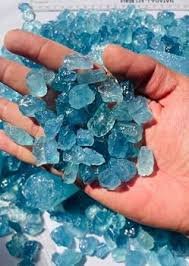
The reference image of small, translucent blue-coloured pieces illustrates the general appearance of this product format. However, a photograph alone cannot confirm whether the material is natural aquamarine, treated beryl, synthetic material, or an imitation.
Appearance and Colour Variations
Aquamarine chips may vary in translucency, colour intensity, surface texture, and shape. Natural materials can show individual variations, while processed batches may be sorted to achieve a more consistent appearance.
When evaluating a batch, buyers should consider:
- Colour: The actual blue or blue-green shade under consistent lighting.
- Transparency: Whether the pieces are transparent, translucent, or relatively opaque.
- Shape: Angular, irregular, rounded, or otherwise processed pieces.
- Surface finish: Rough, chipped, tumbled, or polished surfaces.
- Consistency: The variation in size, colour, and usable material throughout the lot.
These characteristics describe appearance and workmanship; they do not independently establish authenticity.
Loose Chips vs. Faceted Aquamarine
| Feature | Loose gemstone chips | Faceted gemstones |
|---|---|---|
| Shape | Usually irregular | Precisely cut |
| Surface | May be rough or polished | Multiple polished facets |
| Size | Often supplied in a size range | Commonly specified by dimensions or carat weight |
| Typical applications | Crafts, beadwork, decorative projects | Fine jewellery and gemstone settings |
| Quality priorities | Size consistency, usable yield, colour, condition | Colour, clarity, cut, carat weight |
| Pricing basis | May be sold by weight or quantity | Commonly valued by individual stone and carat weight |
Chips are not simply lower-grade faceted gemstones. They are a different product format intended for different applications.
4. Types and Quality of Aquamarine
Natural, Treated, Synthetic, and Imitation Material
Understanding these categories is essential when purchasing aquamarine.
Natural aquamarine: A blue to greenish-blue variety of beryl formed through natural geological processes. It may be cut, polished, or treated after extraction.
Treated aquamarine: Natural aquamarine that has undergone a process intended to modify its appearance. Heat treatment is a recognised enhancement in the trade. Buyers should request disclosure of known treatments rather than assume the material is untreated.
Synthetic aquamarine: Laboratory-grown blue beryl with substantially the same chemical composition and crystal structure as natural aquamarine. It should be distinguished from natural material through appropriate identification and disclosure.
Imitation aquamarine: Glass or another material selected or manufactured to resemble aquamarine without being the same gemstone.
Natural origin, treatment status, and quality are separate considerations. A natural stone may be treated, and a visually attractive stone is not necessarily natural.
What Determines Aquamarine Quality?
For transparent aquamarine gemstones, quality is commonly assessed through colour, clarity, cut, and carat weight.
For loose chips, the priorities are somewhat different.
- Colour intensity: Buyers may prefer a particular shade or a consistent colour range.
- Clarity and transparency: Internal inclusions and fractures affect appearance and may influence durability.
- Size: A defined size range helps manufacturers determine suitability for their designs.
- Shape and finish: These affect handling, appearance, and processing requirements.
- Consistency: Uniform batches can be important for jewellery production and retail presentation.
- Material identity: Verified composition and accurate treatment disclosures support fair comparisons.
- Documentation: Relevant laboratory reports can provide additional confidence when their scope covers the questions being asked.
There is no universal grading scale for every type of gemstone chip. If a supplier advertises a grade, ask for its definition and the criteria used.
How Can You Verify Genuine Aquamarine?
Colour alone cannot establish whether a blue gemstone is aquamarine. Professional gemologists may examine refractive index, specific gravity, microscopic characteristics, and other diagnostic properties.
Where a transaction requires independent verification, consider a report from a reputable gemological laboratory. Check what the report actually establishes, whether it addresses natural or laboratory-grown material, and whether it refers to the goods being purchased.
Before buying, request:
- A written description of the material.
- Disclosure of known treatments.
- Representative photographs and, where practical, a sample.
- Available laboratory reports or supporting documentation.
- Clear return or dispute terms if the delivered product does not match its description.
These precautions are especially valuable for higher-value purchases and wholesale orders.
5. Aquamarine Stone Benefits and Traditional Beliefs
Aquamarine has long been associated with the sea, tranquillity, and clear communication. These associations remain an important part of its cultural and symbolic appeal.
Traditional Meanings of Aquamarine
In different gemstone traditions, aquamarine is associated with:
- Calmness: Its soft blue colour is often used as a symbol of peace and serenity.
- Communication: Some spiritual traditions associate the stone with clear expression and thoughtful conversation.
- Courage and protection: Historical maritime beliefs connected aquamarine with sailors and safe journeys.
- Emotional balance: Crystal enthusiasts may use it as a personal symbol of patience and composure.
- Reflection and mindfulness: Its ocean-inspired appearance can complement meditation spaces and personal collections.
These meanings are traditional or personal interpretations rather than established physical effects.
Crystal Healing and Spirituality
Some practitioners believe aquamarine supports relaxation, emotional harmony, or spiritual awareness. Such claims belong to the realm of belief and personal practice.
There is insufficient reliable scientific evidence that aquamarine independently produces specific medical or psychological benefits through crystal healing. It should not be represented as a proven treatment or a substitute for professional healthcare.
The appeal of aquamarine can still be meaningful through its beauty, cultural history, and personal symbolism without making unsupported therapeutic claims.
6. Aquamarine Stone Uses
The practical applications of aquamarine depend on the form and quality of the material.
Jewellery Making
Transparent aquamarine is widely appreciated for rings, earrings, necklaces, bracelets, and pendants. Its cool colour complements silver, white gold, yellow gold, and a range of other materials.
Loose chips may be suitable for handmade jewellery designs where irregular shapes are intentional. Before using them, confirm whether they are drilled, polished, or supplied as unprocessed pieces.
Beads, Pendants, and Accessories
Processed pieces can be incorporated into beadwork, pendants, and decorative accessories when their size, shape, and durability are appropriate.
Sharp edges, inconsistent dimensions, and visible fractures can affect their suitability. Buyers should check these characteristics before committing to a production run.
Decorative and Creative Applications
Depending on the actual material, chips may also be used in mosaics, mixed-media artwork, decorative displays, and educational mineral collections. Use in resin or other manufacturing processes should be assessed for material compatibility.
For wholesalers and jewellery makers, the most useful specification is not simply the gemstone name. It is a clear description of the material, dimensions, finish, and usable proportion of the batch.
7. Aquamarine Gemstone Price and Wholesale Buying
The price of aquamarine varies considerably according to material identity, quality, form, processing, and commercial terms. A single price cannot reliably represent every aquamarine product.
Key Factors Affecting Price
Colour and clarity: Attractive colour and good transparency can influence the value of faceted aquamarine. For chips, consistency and usable yield may be more relevant.
Size and weight: Larger faceted stones may command higher per-carat prices. Chip products may be sold by gram, kilogram, piece count, or another specified unit.
Material and treatment: Verified natural aquamarine, treated natural aquamarine, synthetic material, and imitations are distinct categories.
Processing: Sorting, polishing, drilling, cutting, and packaging can contribute to costs.
Documentation: Independent laboratory reports may add cost while providing useful verification within the scope of the report.
Supply and order quantity: Availability, minimum order quantities, shipping, packaging, and applicable taxes influence the final purchase price.
Aquamarine Stone Wholesale: What Buyers Should Check
For bulk purchases, compare the complete offer rather than just the quoted rate.
| Buying consideration | What to verify |
|---|---|
| Price basis | Per gram, kilogram, piece, or other stated unit |
| Order quantity | Minimum order and quantity-based terms |
| Dimensions | Minimum, maximum, or approximate size range |
| Weight | Net material weight and unit |
| Colour | Actual batch colour and acceptable variation |
| Material | Verified identity and known treatment disclosures |
| Usable yield | Proportion suitable for the intended application |
| Packaging | Protection against breakage and abrasion |
| Documentation | Available reports and supporting records |
| Commercial terms | Shipping, taxes, returns, and discrepancy procedures |
Request a representative sample before placing a large order. For repeat purchases, agree on measurable tolerances for size, colour, and condition.
No gemstone purchase should be presented as a guaranteed investment. Future resale value depends on quality, demand, documentation, and transaction costs.
8. Aquamarine Stone Care and Cleaning
Aquamarine has a Mohs hardness of 7.5–8 and is suitable for many jewellery applications, but it still requires sensible handling.
Safe Cleaning
For suitable finished gemstones:
- Use lukewarm water with a small amount of mild soap.
- Clean gently with a soft cloth or soft-bristled brush.
- Rinse carefully with clean water.
- Dry with a lint-free cloth.
- Inspect jewellery settings for signs of looseness.
For loose chips, check their condition and material first. Pieces with fractures, coatings, adhesives, or unknown treatments may require additional precautions.
Storage and Handling
Store aquamarine separately from harder gemstones and abrasive materials. Use soft pouches or divided containers, and avoid unnecessary impact or pressure.
Keep the material away from excessive heat and sudden temperature changes. Harsh chemicals should also be avoided.
Ultrasonic and steam cleaning may be suitable for some aquamarine jewellery, but they are not appropriate for every stone or setting. Existing fractures, liquid inclusions, fracture filling, or other vulnerable features may create risks. When the condition is uncertain, gentle soap-and-water cleaning is the safer choice.
9. How to Buy Quality Aquamarine Gemstone Chips
A reliable buying process begins with a precise product specification.
Choose a Transparent Supplier
Look for sellers who describe the material accurately, provide clear photographs, explain their order terms, and answer questions about product consistency and documentation.
Avoid relying on unsupported claims of exceptional grade, guaranteed natural origin, or certified authenticity.
Confirm Product Specifications
Before ordering, verify the following:
- Product name: Aquamarine Gemstone Chips.
- Product form: Loose chips, with rough or polished finish specified.
- Colour: Blue or blue-green, subject to the actual batch.
- Size: A defined range or agreed tolerance.
- Weight: Net material weight and measurement unit.
- Origin: Only the origin supported by reliable records.
- Material: Natural, treated natural, synthetic, imitation, or another verified description.
- Grade: A defined commercial grade, if applicable.
- Treatment: Known treatment disclosures.
- Packaging: Quantity, packaging method, and protective measures.
- Certification: Available reports and the characteristics they cover.
Sample Testing and Batch Consistency
Examine a sample under consistent lighting. Compare it with the supplier’s photographs and check for colour variation, fractures, sharp edges, inconsistent dimensions, and unusable pieces.
For wholesale orders, request agreement on acceptable variation before payment. Natural materials may vary, so repeat batches should not be assumed to be identical.
Confirm that the invoice specifies the agreed material, quantity, price basis, packaging, and delivery terms. These details help protect both buyers and sellers when the delivered goods are assessed against the order.10. Aquamarine vs. Other Blue Gemstones
Aquamarine, blue topaz, blue sapphire, and blue glass can have similar appearances, but they differ in mineral composition, hardness, and identification characteristics.
| Feature | Aquamarine | Blue Topaz | Blue Sapphire | Blue Glass |
|---|---|---|---|---|
| Material | Beryl | Topaz | Corundum | Manufactured glass |
| Typical colour | Blue to blue-green | Light to vivid blue | Light to deep blue | Variable blue shades |
| Mohs hardness | 7.5–8 | 8 | 9 | Variable |
| Crystal structure | Hexagonal | Orthorhombic | Trigonal | Amorphous |
| Main distinction | Iron-coloured beryl | Separate mineral, often treated for blue colour | Harder mineral with a broad blue range | Manufactured material that may imitate gemstones |
Glass hardness varies by composition. Visual inspection alone cannot conclusively identify these materials.
Aquamarine vs. Blue Topaz
Both gemstones can appear pale blue, but aquamarine belongs to the beryl family while blue topaz is a different mineral. Blue topaz may have stronger colour saturation, although appearance varies considerably.
Treatment is also relevant: blue topaz is commonly treated to produce its commercial colour, while aquamarine may also undergo treatment. Buyers should compare documented material identity and treatment disclosures rather than colour alone.
Aquamarine vs. Blue Sapphire
Blue sapphire belongs to the corundum family and has a Mohs hardness of 9, making it harder than aquamarine. Sapphire can display rich, saturated blues, while aquamarine is commonly recognised for its lighter blue to blue-green tones.
Both can be used in jewellery, but the appropriate choice depends on design, budget, durability requirements, and personal preference.
Aquamarine vs. Blue Glass
Blue glass can imitate aquamarine’s colour and translucency. However, glass is an amorphous manufactured material rather than a crystalline mineral.
Bubbles and flow patterns may sometimes help identify glass, but not every imitation displays obvious features. Appropriate gemological examination is preferable when authenticity is commercially important.
11. Product Description: Aquamarine Gemstone Chips
Aquamarine Gemstone Chips — Blue and Blue-Green Loose Pieces
Bring a refined touch of ocean-inspired colour to your creative projects with Aquamarine Gemstone Chips. Designed for buyers seeking small gemstone pieces, this loose-chip product format offers possibilities for jewellery making, decorative work, craft applications, and gemstone collections, depending on the material’s verified identity and specifications.
With their compact form and distinctive visual character, gemstone chips can be an interesting choice for designers and businesses looking for an alternative to calibrated gemstones. Their suitability for a particular application depends on actual dimensions, surface finish, material quality, and processing requirements.
Product specifications
- Product Name: Aquamarine Gemstone Chips
- Product Form: Loose gemstone chips
- Colour: Blue / blue-green, subject to actual batch
- Size: [Add actual size]
- Weight: [Add actual weight]
- Origin: [Add verified origin]
- Material: [Confirm natural, treated natural, synthetic, imitation, or other material]
- Grade: [Add verified grade, if applicable]
- Treatment: [Add verified treatment details]
- Packaging: [Add packaging details]
- Intended Use: [Add actual product applications]
- Certification: [Add available laboratory report details, if applicable]
Why Consider Aquamarine Gemstone Chips?
Versatile product format: Small pieces can suit designs and projects that call for irregular gemstone shapes.
Distinctive colour palette: Blue and blue-green tones can complement a range of creative and decorative styles, subject to the actual batch.
Suitable for different buyer requirements: Jewellery makers, craft businesses, retailers, and wholesalers can assess the material against their individual production or sourcing needs.
Clear specifications for informed purchasing: Accurate dimensions, weight, material identification, treatment disclosures, and available documentation help buyers determine whether the product meets their requirements.
Who Are These Gemstone Chips For?
Depending on their actual specifications, suitable buyers may include jewellery designers, handmade accessory businesses, craft manufacturers, decorative-art studios, gemstone retailers, wholesalers, and collectors.
Enquire About Product Availability
Looking to source Aquamarine Gemstone Chips for a jewellery project or commercial requirement?
Contact us to discuss available stock, actual size ranges, order quantities, packaging, material documentation, and current pricing. Wholesale enquiries are welcome, subject to availability and agreed specifications.
12. Frequently Asked Questions About Aquamarine Stone
1. What is aquamarine stone?
Aquamarine is a blue to greenish-blue variety of beryl. Its chemical formula is Be₃Al₂Si₆O₁₈, and its characteristic colour is primarily associated with trace iron.
2. How can you identify genuine aquamarine?
Visual appearance alone is insufficient for reliable identification. A qualified gemologist can examine diagnostic properties, and an independent laboratory report may help establish material identity when required.
3. Are aquamarine gemstone chips natural?
Not necessarily. The term describes the product’s form, not its origin. Buyers should verify whether the material is natural aquamarine, treated natural aquamarine, laboratory-grown material, or an imitation.
4. What are aquamarine chips used for?
Depending on their size and condition, they may be used for jewellery making, beadwork, pendants, mosaics, decorative displays, and craft projects.
5. Is aquamarine a durable gemstone?
Aquamarine has a Mohs hardness of 7.5–8 and is suitable for many jewellery applications. However, it can still fracture or chip following impact, so appropriate handling and setting are important.
6. How should aquamarine be cleaned?
For suitable pieces, use lukewarm water, mild soap, and a soft cloth or brush. Avoid excessive heat, harsh chemicals, and unsuitable mechanical cleaning methods, especially if fractures or treatments are present.
7. What affects aquamarine gemstone price?
Colour, clarity, size, cut or processing, material identity, treatment, documentation, availability, and supplier terms can influence price. For chips, dimensions, batch consistency, and usable yield may be particularly important.
8. Is certification available for aquamarine?
Independent gemological laboratories may issue reports identifying a gemstone and describing certain characteristics. Availability and scope vary. Buyers should confirm what the specific report establishes.
9. What is the difference between aquamarine and blue topaz?
Aquamarine is a variety of beryl, while blue topaz is a separate mineral. They differ in composition, crystal structure, and other diagnostic properties, even when their colours look similar.
10. Can aquamarine chips be purchased in bulk?
Bulk purchasing may be possible depending on the supplier’s stock and commercial terms. Confirm minimum order quantities, weight, size range, material disclosures, packaging, and pricing before placing an order.
11. Is every aquamarine gemstone deep blue?
No. Aquamarine ranges from very pale blue to blue-green and other greenish-blue shades. Colour intensity varies naturally, and a lighter shade does not automatically indicate imitation material.
12. Is natural aquamarine always untreated?
No. Natural aquamarine may undergo treatment to modify its appearance. Natural origin and treatment status are separate characteristics and should be disclosed accurately.
13. Can aquamarine chips be used in resin crafts?
Potentially, provided the material is compatible with the resin and curing process. Test a small sample first and consider the effects of heat, adhesives, coatings, and other processing conditions.
14. Can aquamarine chips be used in fine jewellery?
Some may be suitable for jewellery components, but suitability depends on size, finish, edge condition, durability, and the design. Not every loose chip is appropriate for a fine-jewellery setting.
15. How do I choose an aquamarine wholesale supplier?
Look for transparent material descriptions, clear specifications, representative samples, reliable weighing and packaging practices, relevant documentation, and written commercial terms. Agree on acceptable quality tolerances before purchasing in bulk.
13. SEO Metadata and Related Blog Topics
Meta title: Aquamarine Stone: Properties, Benefits, Uses & Buying Guide
Meta description: Explore aquamarine stone properties, traditional benefits, gemstone chip uses, quality factors, pricing, care, and buying tips for retail and wholesale buyers.
Suggested URL slug: /aquamarine-stone-guide/
Primary keyword: Aquamarine Stone
Secondary keywords:
- Aquamarine Gemstone Chips
- Natural Aquamarine Stone
- Aquamarine Stone Benefits
- Aquamarine Stone Uses
- Aquamarine Gemstone Price
- Blue Aquamarine Gemstone
- Buy Aquamarine Gemstone Chips
- Aquamarine Stone Wholesale
Five Related Blog Topic Ideas
- Aquamarine vs. Blue Topaz: Key Differences and Buying Tips
- How to Identify Genuine Aquamarine: A Practical Gemstone Guide
- Wholesale Gemstone Chips: What Jewellery Manufacturers Should Know
- Aquamarine Stone Care: Cleaning, Storage, and Durability
- Understanding Gemstone Quality: Colour, Clarity, Treatment, and Certification
14. Conclusion: Discover the Appeal of Aquamarine Stone
Aquamarine combines a distinctive blue to blue-green colour palette with the established mineralogical characteristics of beryl. Its elegance, relative hardness, and versatility make it an enduring choice for jewellery, gemstone collections, and suitable decorative applications.
For buyers interested in Aquamarine Gemstone Chips, a confident purchasing decision begins with accurate product information. Material identity, size, weight, finish, colour consistency, treatment disclosures, and suitability for the intended application should all be considered before ordering.
Whether you are purchasing for a personal project, jewellery production, retail distribution, or wholesale sourcing, clear specifications and transparent supplier communication are essential.
Interested in Aquamarine Gemstone Chips? Contact us to enquire about available stock, verified product specifications, sample requests, bulk order requirements, packaging, and current pricing. Share your preferred size, quantity, and intended application so that the appropriate available material can be discussed.
Choose with confidence by prioritising verified information, suitable quality, and a product specification that matches your requirements.
